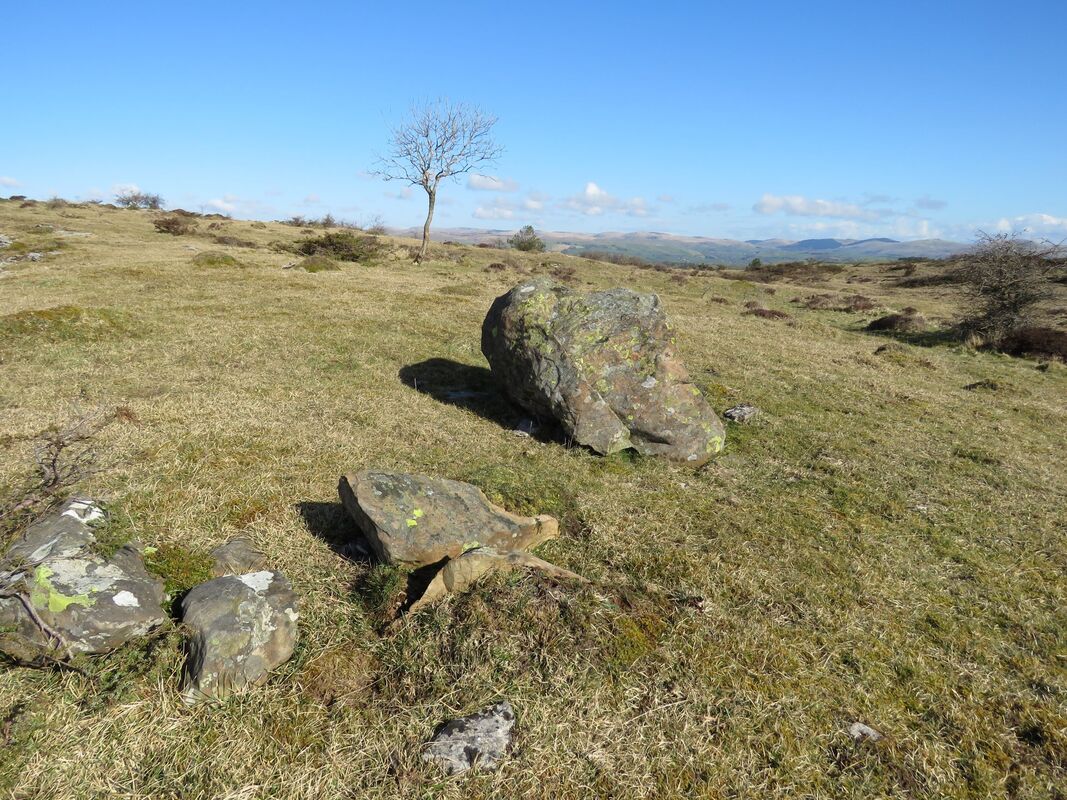
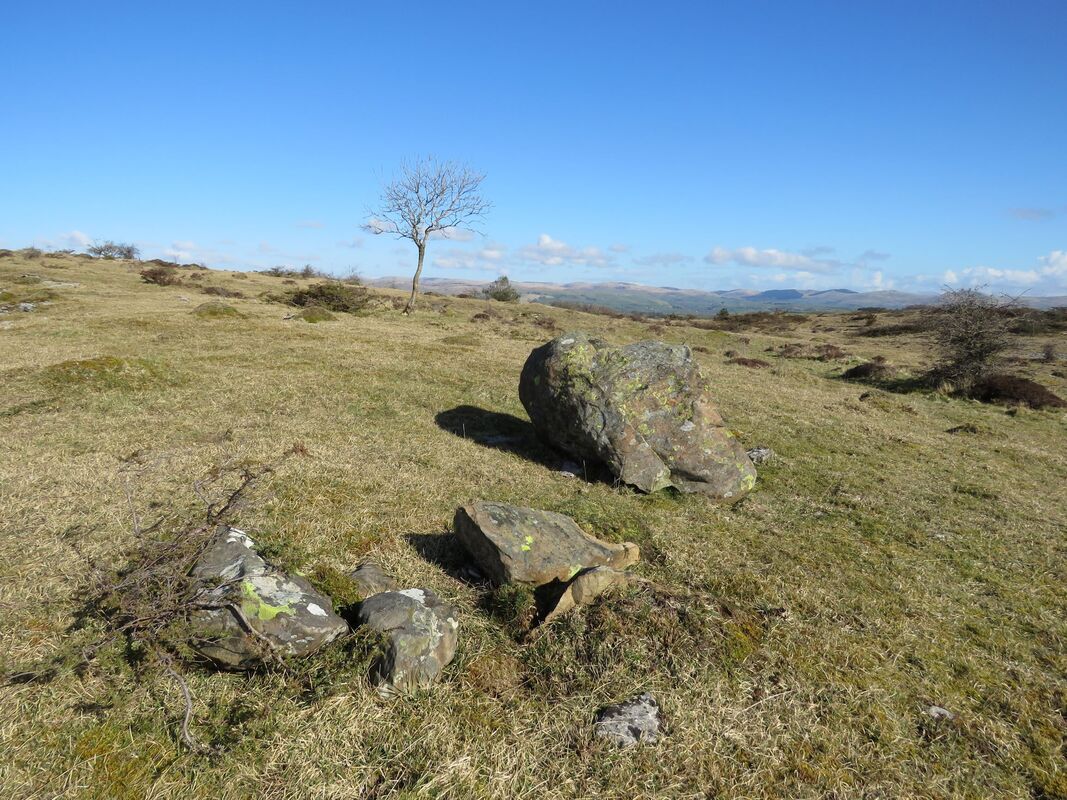
 Erratic and its debris, Scout Scar
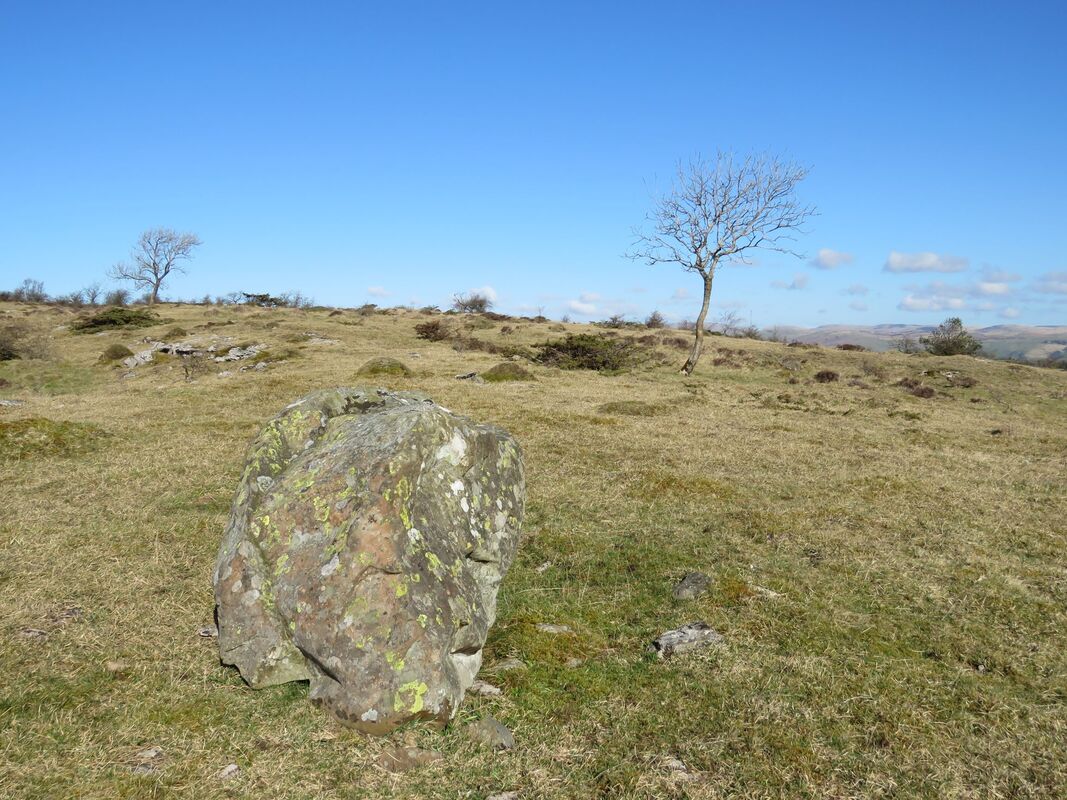
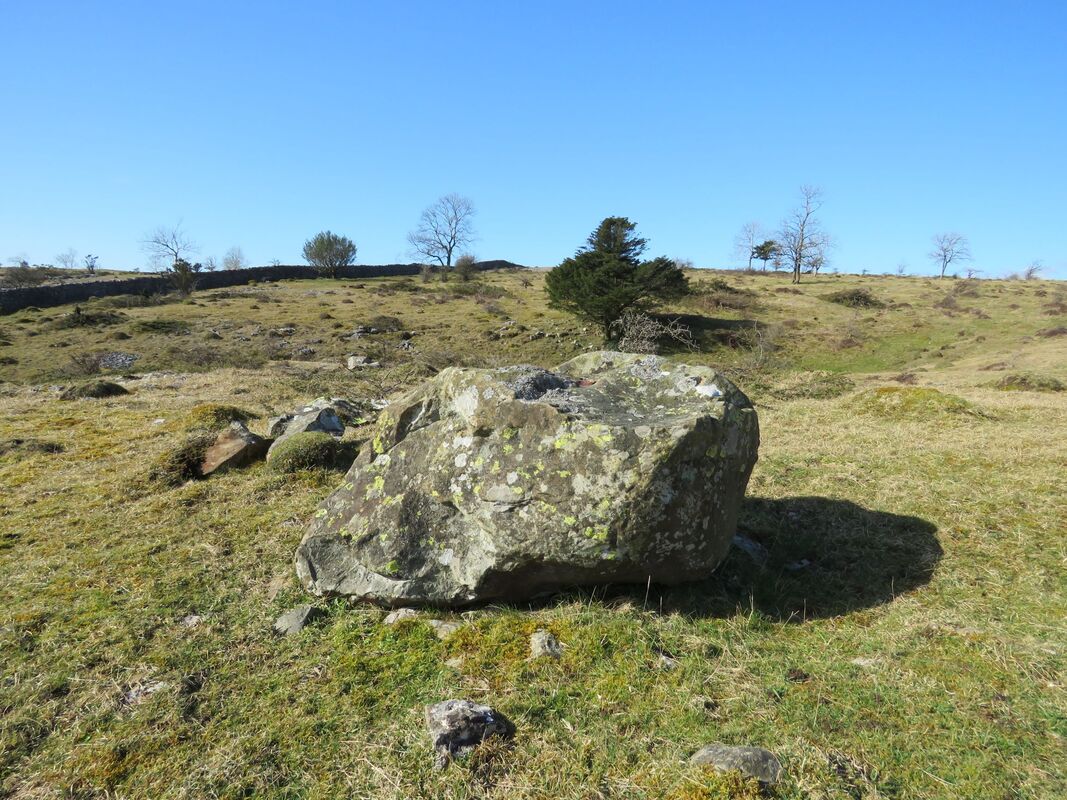
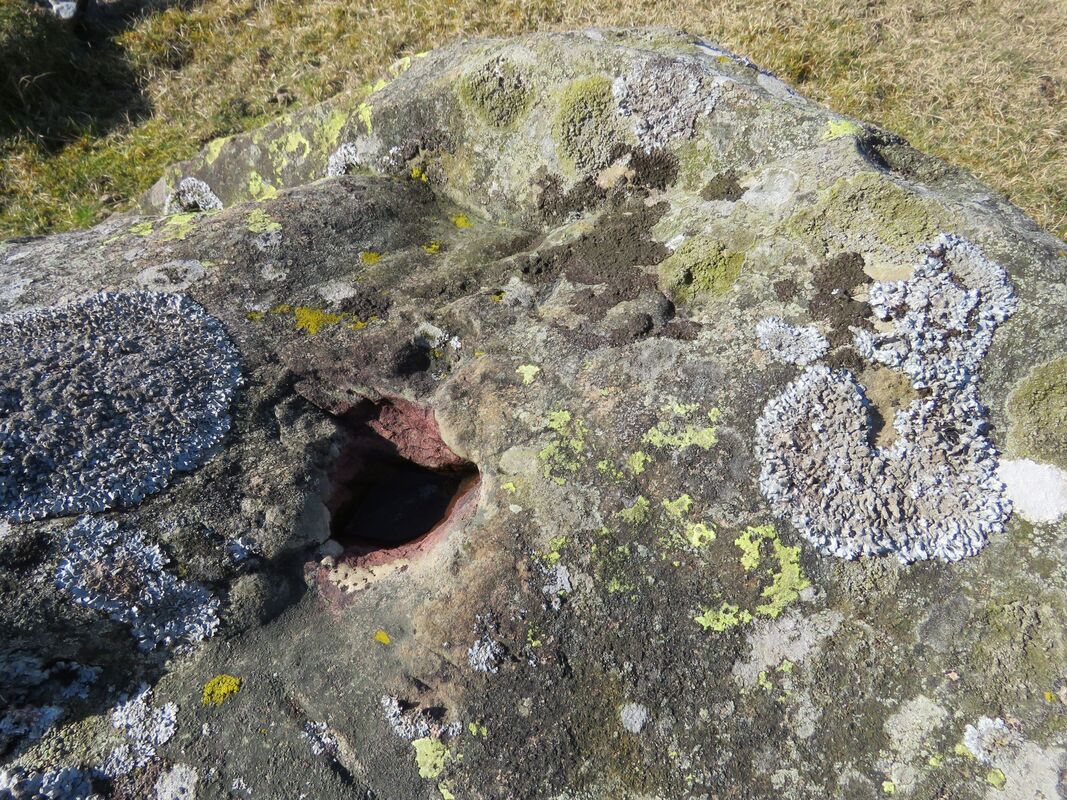
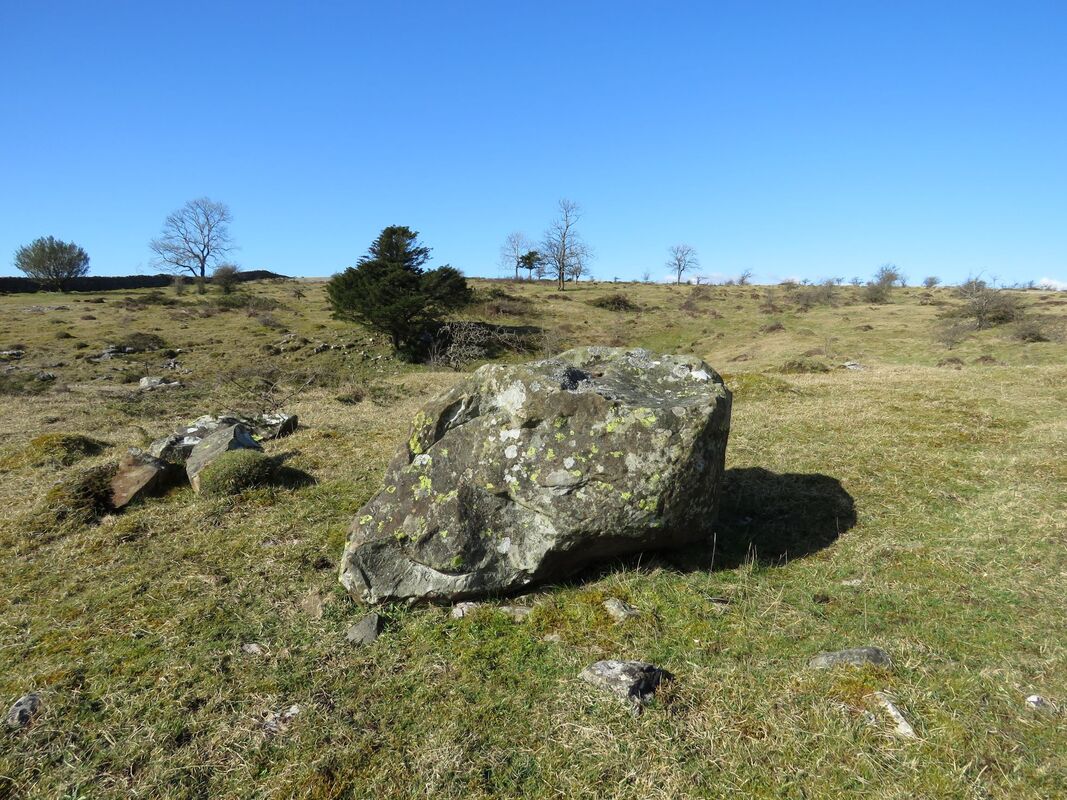
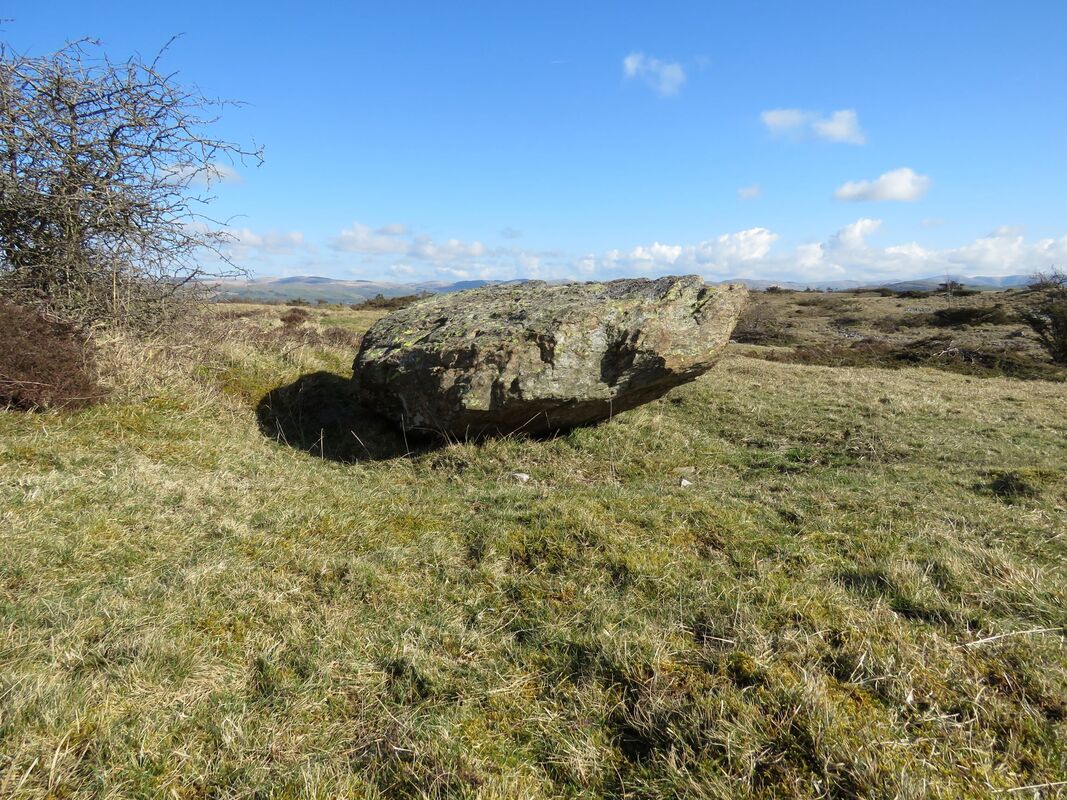
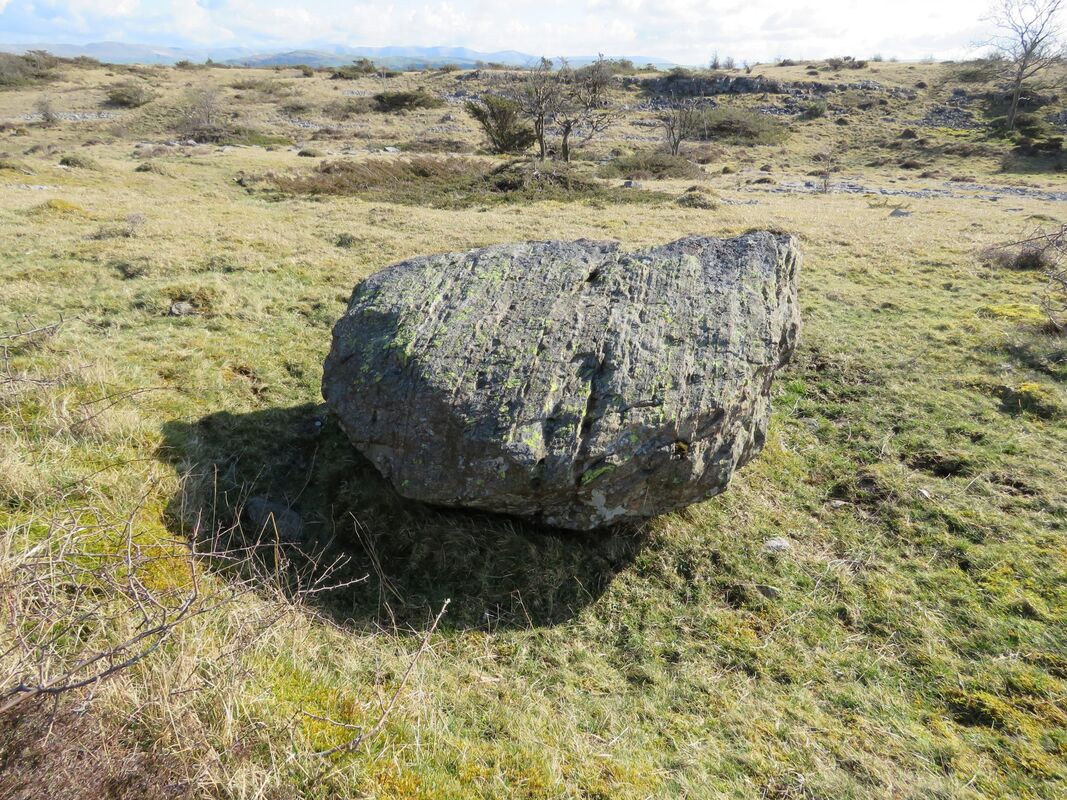
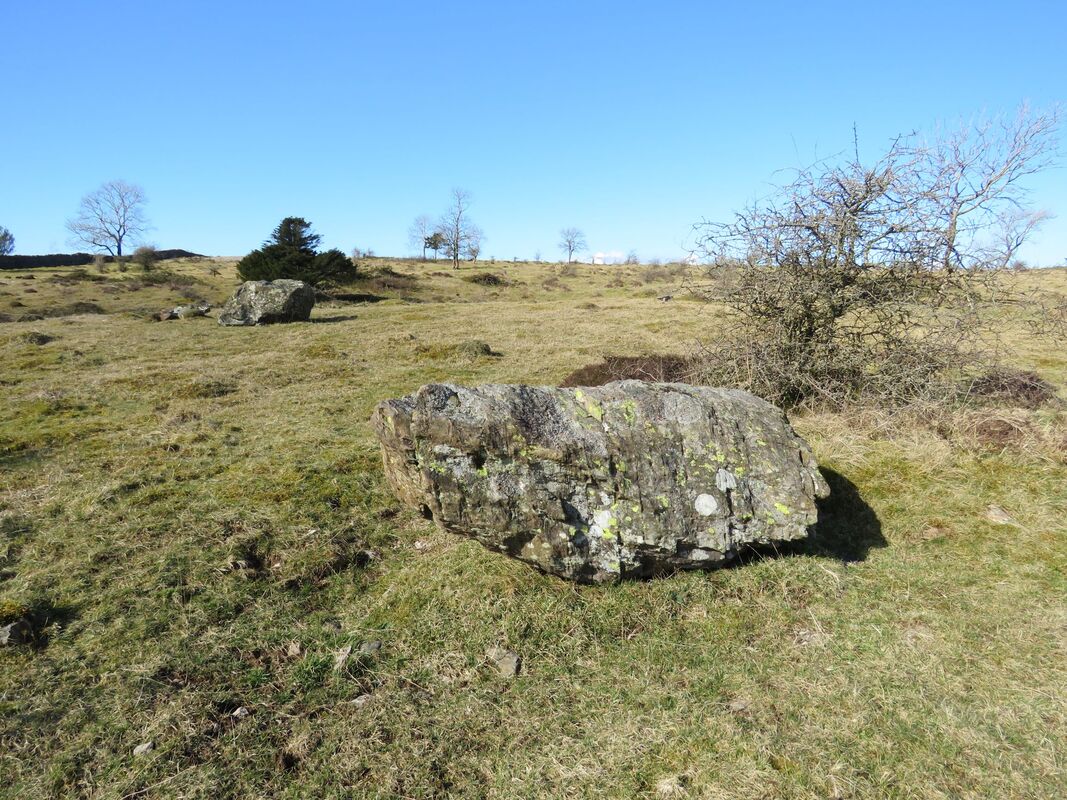
 Erratics on Scout Scar are striking natural sculptures. Boulders transported on glaciers during the last ice-age, then dumped as the ice melted. The bedrock on Scout Scar is limestone, the erratics are Borrowdale Volcanics, an older rock sitting on a younger. The inverse of what you'd expect.
Rock ground smooth, rounded, eroded as it is borne by the glacier. Sitting in a shallow basin on an alien bedorck.
Rock ground smooth, rounded, eroded as it is borne by the glacier. Sitting in a shallow basin on an alien bedorck.
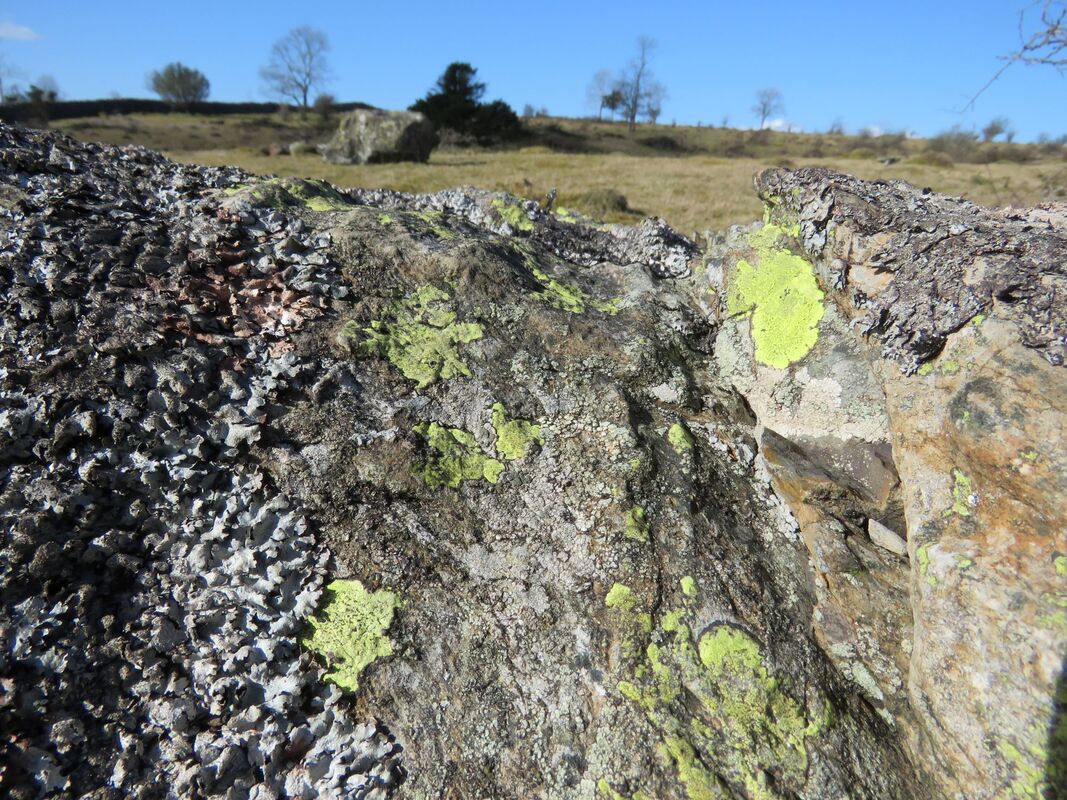
Their shapes are often distinctive. They're patterned with lichens, more diverse and colourful than those found on limestone which tend to be white. Their lichen patterns remind me of map colourings. In a harsh winter ice can exploit a weakness in the rock which cracks, forms a fissure, and a fragment may break off. You find erratics standing on the limestone grassland, with small boulders looking out of place in a stone wall made not quite entirely of slats of limestone. Rounded erratics like cannon balls. Not sure I've seen these particular erratics before. Certainly, I have not studied them so closely.

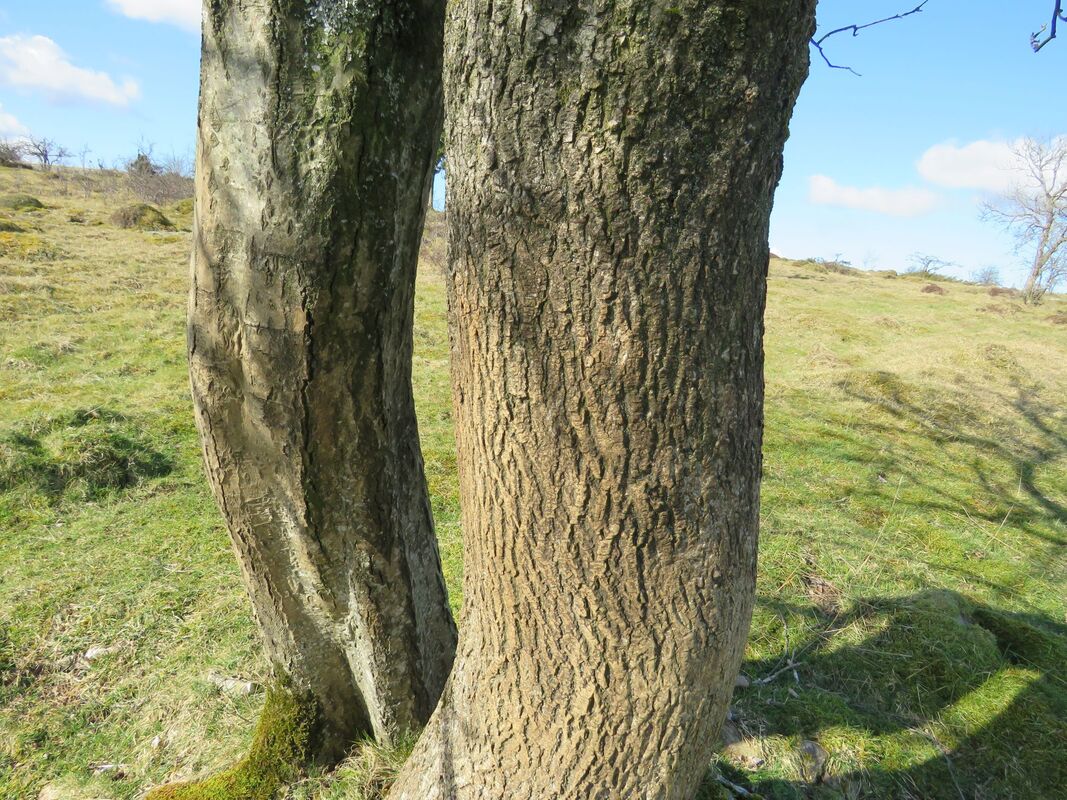
There are several mature trees hereabouts and I'm drawn to a double trunk which is puzzling. I can see a few wizened whitebeam berries. Tracing the inter-twined branches back to their trunk is not easy. Looking at the bark on both trees I can see that one is whitebeam, the other ash.

As I crossed Kendal Race Course I saw a kestrel hovering, hovering, then swooped and killed. It didn't fly off but must have devoured its prey somewhere in the tussocky grass. The day began warm, with cloudless skies. Gradually, the wind grew stronger and cloud gathered.
 RSS Feed