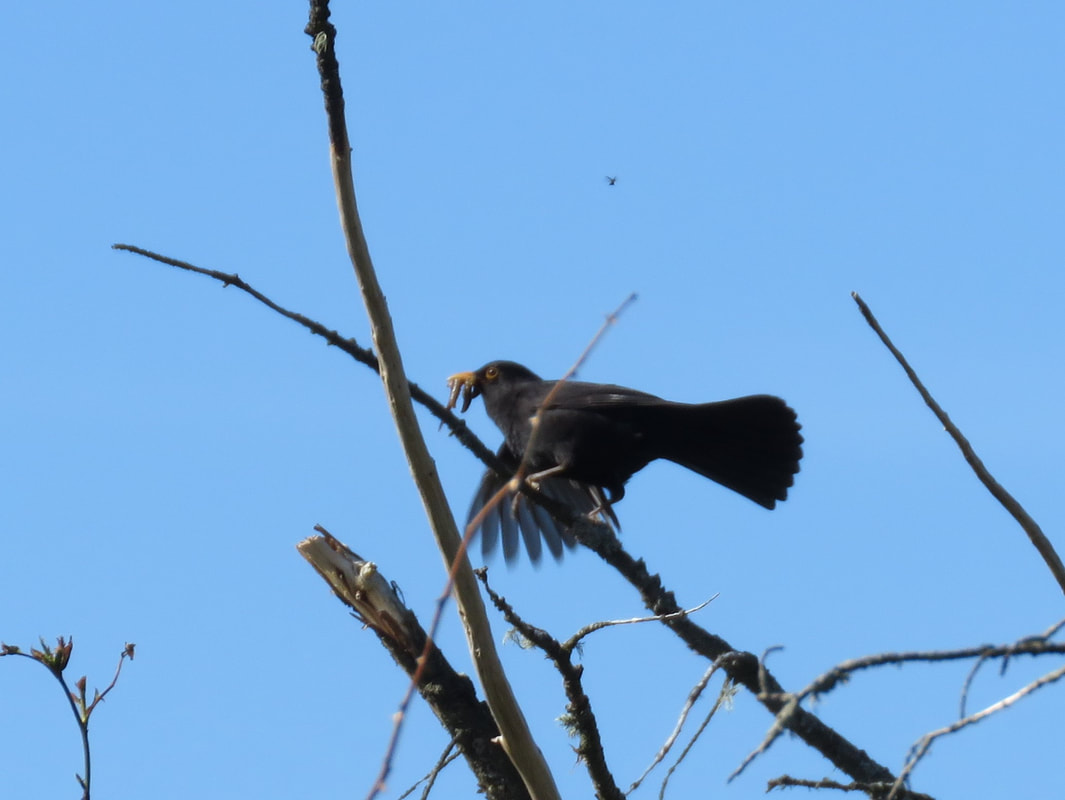
 Male blackbird with insects to feed young
 This is the driest May since 1896. The sunniest in England since records began. Glorious days, but drought-stress is visible in the landscape and Meteorological Summer doesn't begin until 1st June.
Today, United Utilities tell us we need to conserve water to ensure the taps keep running. Because of lockdown and our being at home we're using abnormal quantities of water.
The weather forecast gives no sign of rain to come.
Today, United Utilities tell us we need to conserve water to ensure the taps keep running. Because of lockdown and our being at home we're using abnormal quantities of water.
The weather forecast gives no sign of rain to come.
Extremes of weather: relentless rain through autumn and winter, now a long period of hot, dry weather - it feels like mid-summer..
When first I found my redstart, identified his display perches and began to photograph him, his ash tree was just coming into leaf. Early May and the hanging wood was verdant, the freshest green. Often, my first glimpse of him is a streak of orange from his tail feathers but yesterday I realised the ash tree has drought-stress and some of its May foliage is dying. Rooted in escarpment scree, the tree never has much water but this is its niche habitat- its designed to cope. Not sure where it is rooted, to be honest. I sit on the escarpment edge, look down-slope to the ash tree just below a sudden drop in the cliff. I like the element of secrecy it holds.
When first I found my redstart, identified his display perches and began to photograph him, his ash tree was just coming into leaf. Early May and the hanging wood was verdant, the freshest green. Often, my first glimpse of him is a streak of orange from his tail feathers but yesterday I realised the ash tree has drought-stress and some of its May foliage is dying. Rooted in escarpment scree, the tree never has much water but this is its niche habitat- its designed to cope. Not sure where it is rooted, to be honest. I sit on the escarpment edge, look down-slope to the ash tree just below a sudden drop in the cliff. I like the element of secrecy it holds.
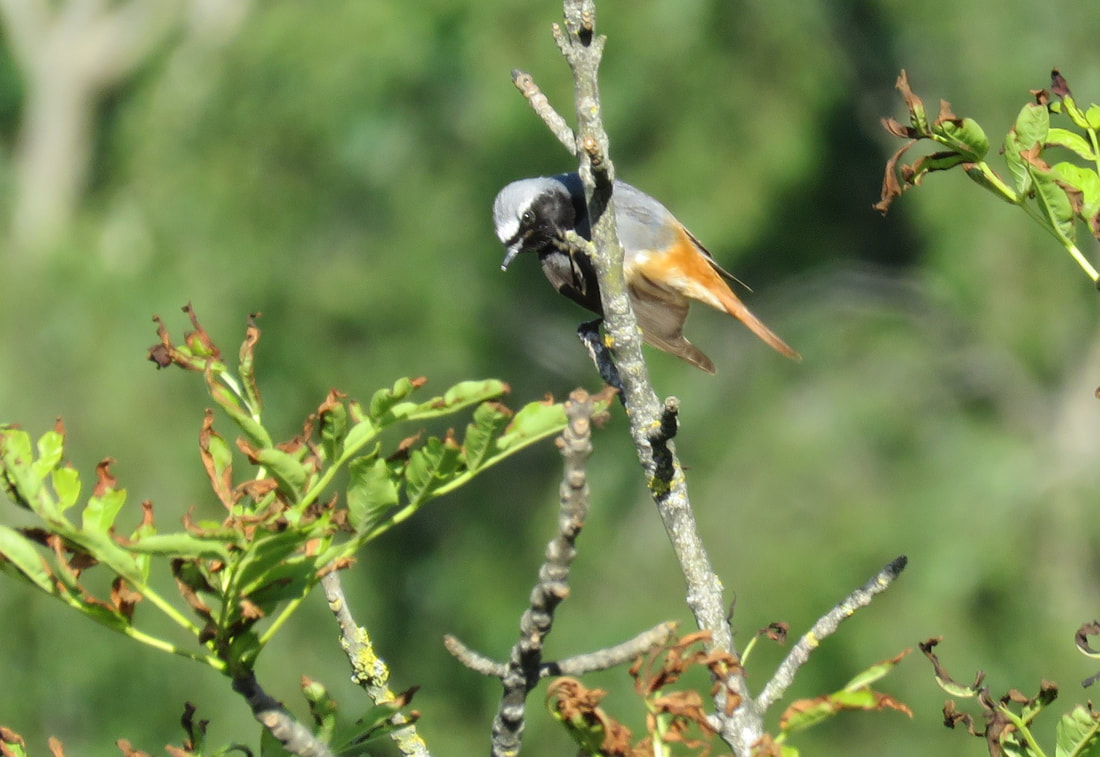
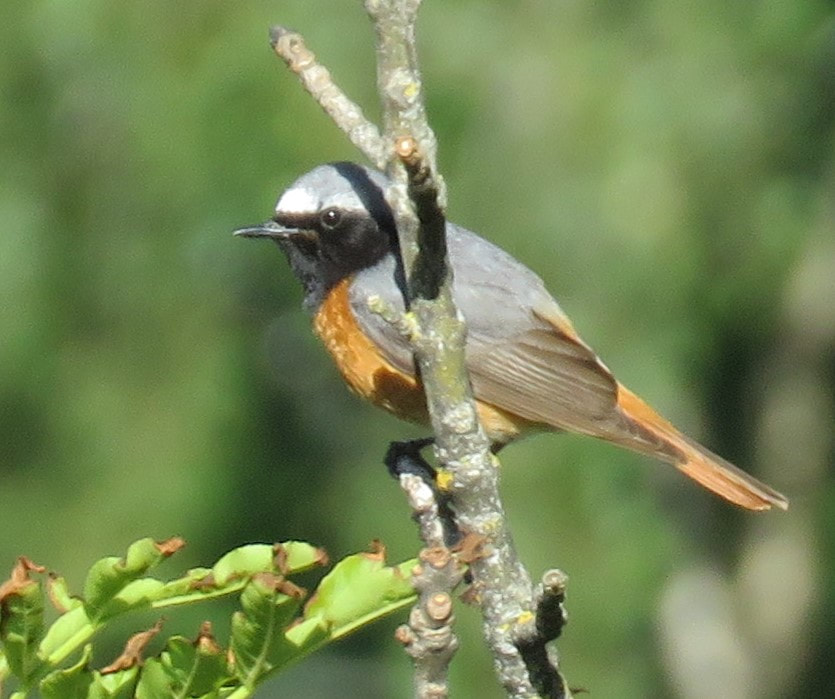
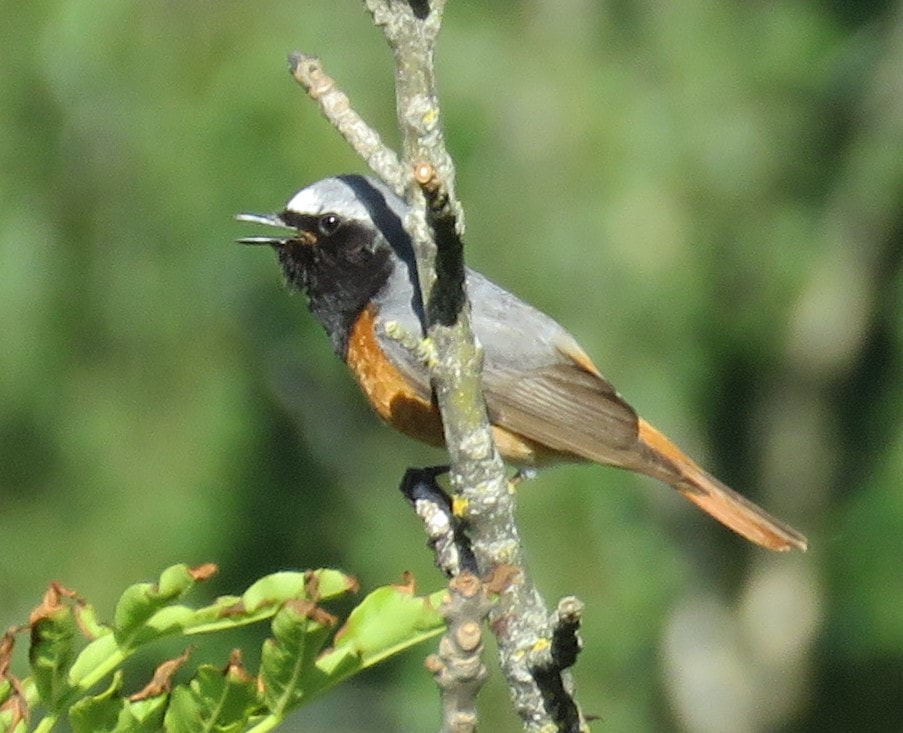
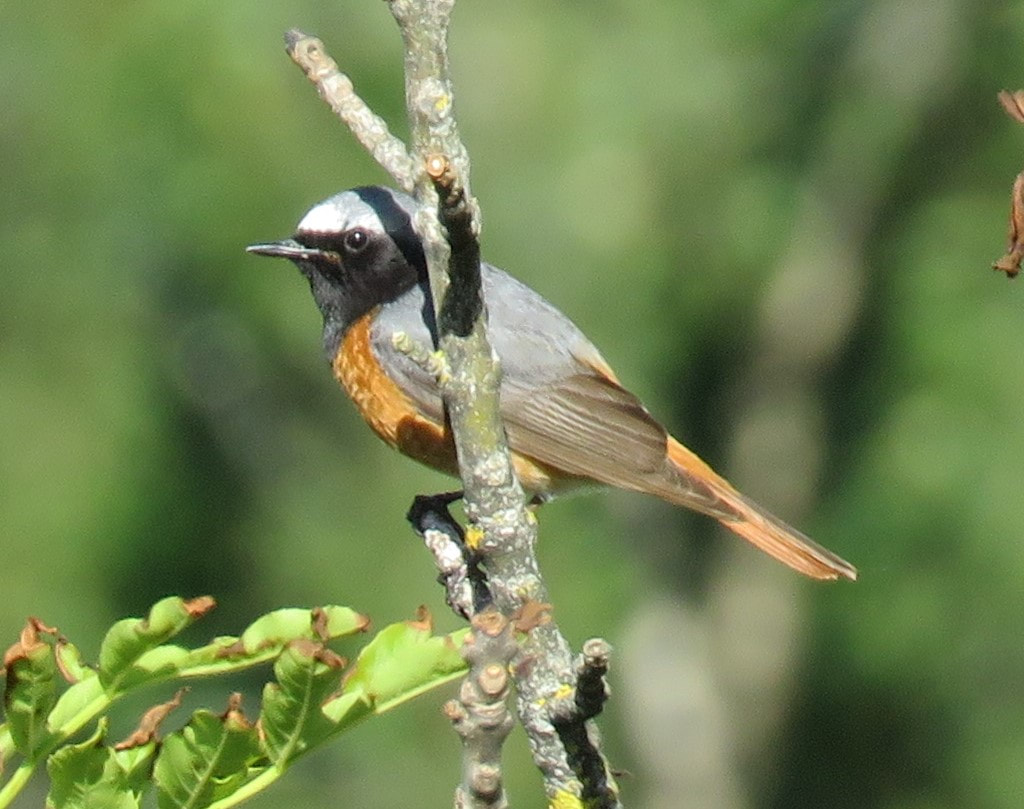
He arrived and began to sing on Scout Scar escarpment early in May. He has to establish his territory, claim it, defend it from other males, find a female and mate. She will lay 5-6 light blue eggs and will incubate them for 11-14 days. Both parents will feed their young. One reason I keep returning to his display perch is to see if there's a change in behaviour, if I might spot whether he's bred successfully. And I'd love to find young. It's some years since I did so. And his song is now deep in my heart. He opens his beak so wide to pour forth that song and for a second there's a sense of bill as weapon- what insects see the moment before they're caught.
Photography is the other challenge. The aim of a photograph is to make the bird visible. What I show isn't what you see when first you hear his song. All a newcomer would see is a leafy tree with song somewhere in the wood. Yes, he sings from the same perch but a twig interposes between him and me. And leaves can obscure him too. He's down-slope of me. I work out the structure of the tree to relocate him, but if I shuffle along on the slope to see him better the angle changes, the tree is three-dimensional and shape-changes before my eyes. He's watching me, you can see it in the glint in his eye although he continues to sing, seemingly unperturbed. I'd leave if I were disturbing him. I think he accepts me because I'm quiet and still.
Photography is the other challenge. The aim of a photograph is to make the bird visible. What I show isn't what you see when first you hear his song. All a newcomer would see is a leafy tree with song somewhere in the wood. Yes, he sings from the same perch but a twig interposes between him and me. And leaves can obscure him too. He's down-slope of me. I work out the structure of the tree to relocate him, but if I shuffle along on the slope to see him better the angle changes, the tree is three-dimensional and shape-changes before my eyes. He's watching me, you can see it in the glint in his eye although he continues to sing, seemingly unperturbed. I'd leave if I were disturbing him. I think he accepts me because I'm quiet and still.
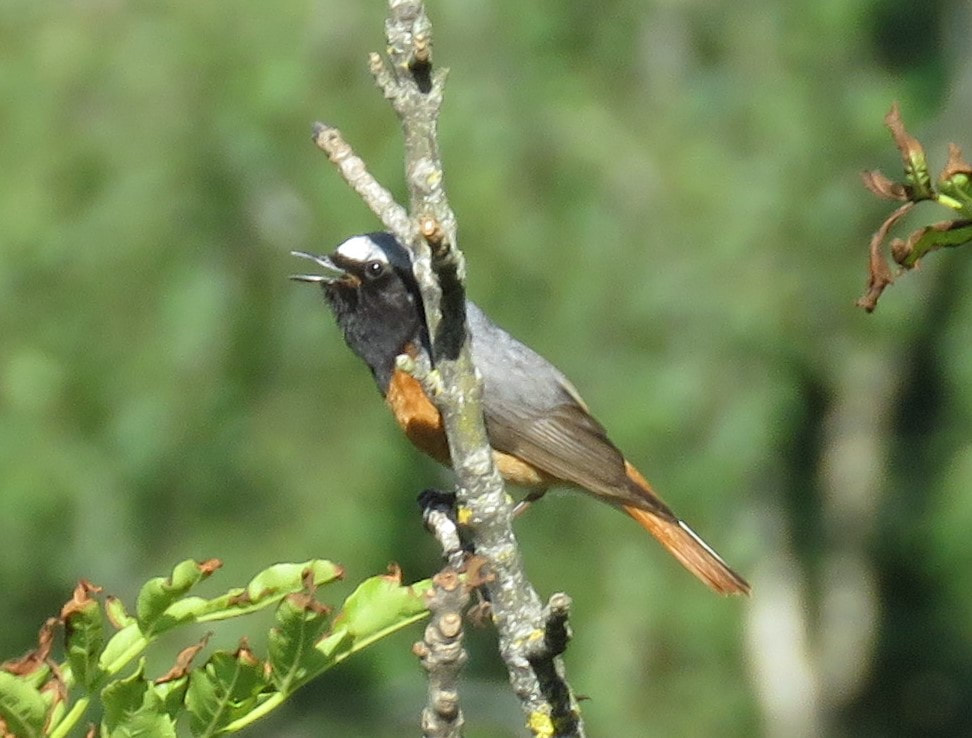
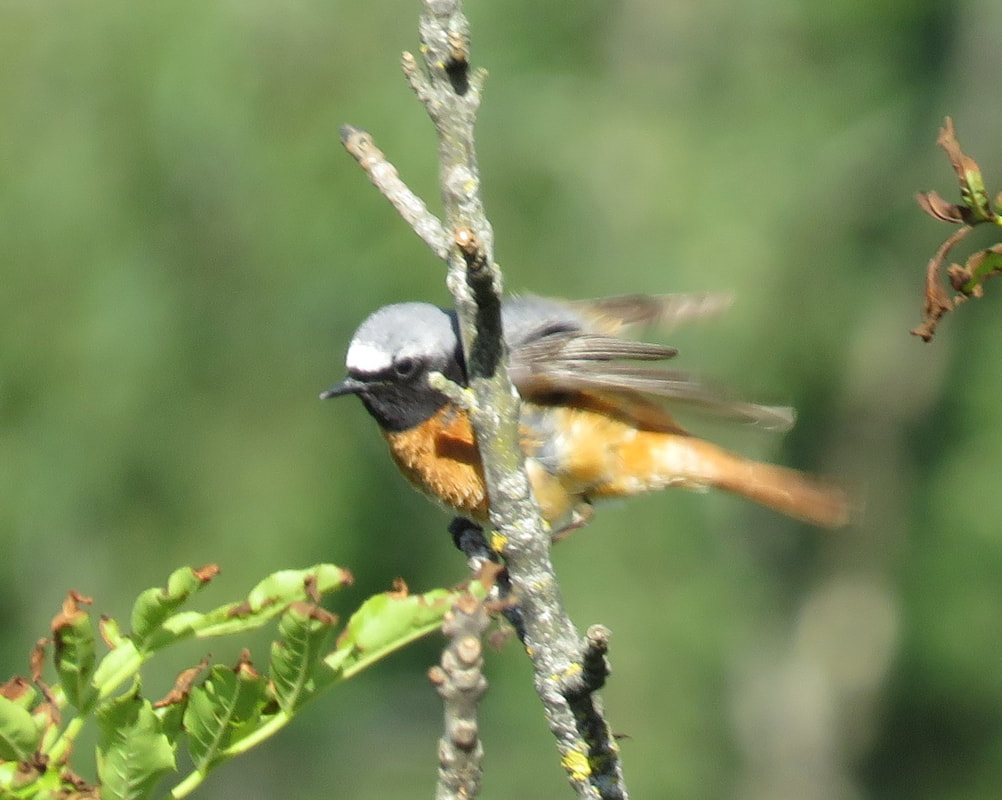
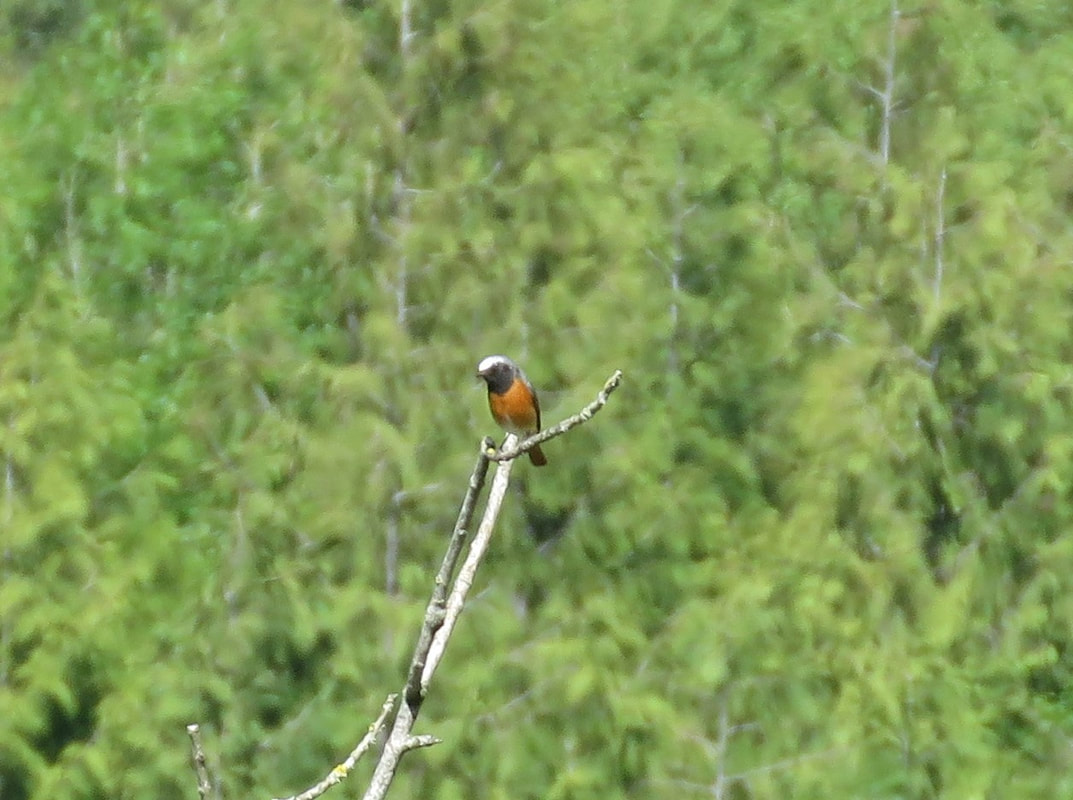
Here's my spring-watch on Scout Scar, my community. Meanwhile, the drought goes on. And the Covid 19 pandemic goes on- we've been warned it will be a marathon, not a sprint. However we occupy our time, these things define 2020.
Pandemic 1918 is an excellent 3- part documentary on radio 4.
Toward the end of the The Great War this pandemic took hold and the death rate exceeded war losses. It's long-term impact on families already reeling from four years of war is unimaginable.
Talking with my contemporaries, we agree that we were not taught about The Great War at school. We heard nothing at all about the 1918 Pandemic, known as The Spanish Flu. We studied Owen and Sassoon, The War Poets, at school and when reading English at University. And I don't recall hearing anything about the 1918 Pandemic whose disastrous global spread and whose consequences were inseparable from the war. Why not? Why ever not? These combined events has a colossal impact on our grandparents, on our parents generation and we were taught nothing of them.
It was Bubonic Plague that gripped my imagination as I grew up. The plague which arrived in England in the 14th century and revisited recurrently. I had a history book with an illustration from a story heard by Samueal Pepys in 1661 of a naked child being handed down to safety from a house ridden with plague. Perhaps historical distance was thought to insulate us- Bubonic Plague is of the distant past. But we grew up with a silence surrounding the 1918 Pandemic and within our families there must have been those who lost loved ones, who remembered.
Pandemic 1918 is an excellent 3- part documentary on radio 4.
Toward the end of the The Great War this pandemic took hold and the death rate exceeded war losses. It's long-term impact on families already reeling from four years of war is unimaginable.
Talking with my contemporaries, we agree that we were not taught about The Great War at school. We heard nothing at all about the 1918 Pandemic, known as The Spanish Flu. We studied Owen and Sassoon, The War Poets, at school and when reading English at University. And I don't recall hearing anything about the 1918 Pandemic whose disastrous global spread and whose consequences were inseparable from the war. Why not? Why ever not? These combined events has a colossal impact on our grandparents, on our parents generation and we were taught nothing of them.
It was Bubonic Plague that gripped my imagination as I grew up. The plague which arrived in England in the 14th century and revisited recurrently. I had a history book with an illustration from a story heard by Samueal Pepys in 1661 of a naked child being handed down to safety from a house ridden with plague. Perhaps historical distance was thought to insulate us- Bubonic Plague is of the distant past. But we grew up with a silence surrounding the 1918 Pandemic and within our families there must have been those who lost loved ones, who remembered.
 RSS Feed