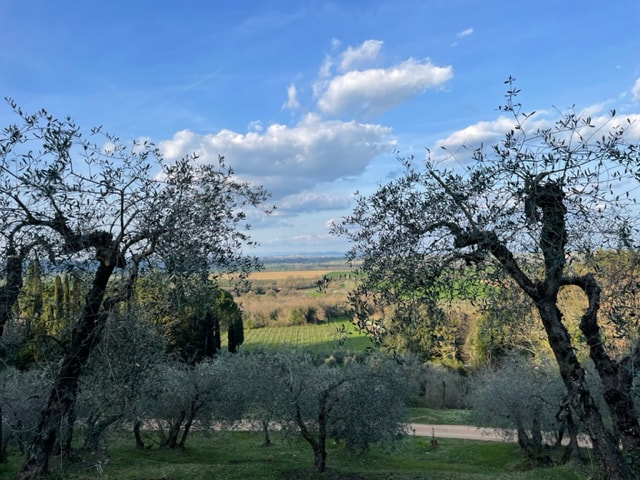
 Looking north to SIena from our olive grove
Good Government ‘ is nowhere to be found. In turbulent times, in 1338 when Ambrogio Lorenzetti painted his ‘ Allegory of Good and Bad Government’ his frescoes reminded the Sienese of the importance of shared values and the interdependence of town and countryside. Frescoes show scenes of artisans and craftsmen working within the town, tilers up on the rooves fixing pantiles, shoemakers, a doctor tending a patient.
Good Government ‘ is nowhere to be found. In turbulent times, in 1338 when Ambrogio Lorenzetti painted his ‘ Allegory of Good and Bad Government’ his frescoes reminded the Sienese of the importance of shared values and the interdependence of town and countryside. Frescoes show scenes of artisans and craftsmen working within the town, tilers up on the rooves fixing pantiles, shoemakers, a doctor tending a patient.
In the surrounding countryside there are well-dressed equestrian figures, huntsmen with bows and arrows, labourers in the fields, laden packhorses and a black and white banded pig being driven into Siena and about to encounter a couple of hounds on leashes. Good government brings harmony, and hard work is rewarded with leisure. The frescoes are being restored, if only good government might be restored too.
Over Easter 2024 we look out from our terrace, north to Siena. Driving across the plain, we hear skylark singing and a flock of egret takes flight from a pasture. Watercourses are in spate after two days of heavy rain. It’s a landscape patterned with vineyards and olive groves and this is the countryside shown in Lorenzetti’s 1338 frescoes.
Over Easter 2024 we look out from our terrace, north to Siena. Driving across the plain, we hear skylark singing and a flock of egret takes flight from a pasture. Watercourses are in spate after two days of heavy rain. It’s a landscape patterned with vineyards and olive groves and this is the countryside shown in Lorenzetti’s 1338 frescoes.
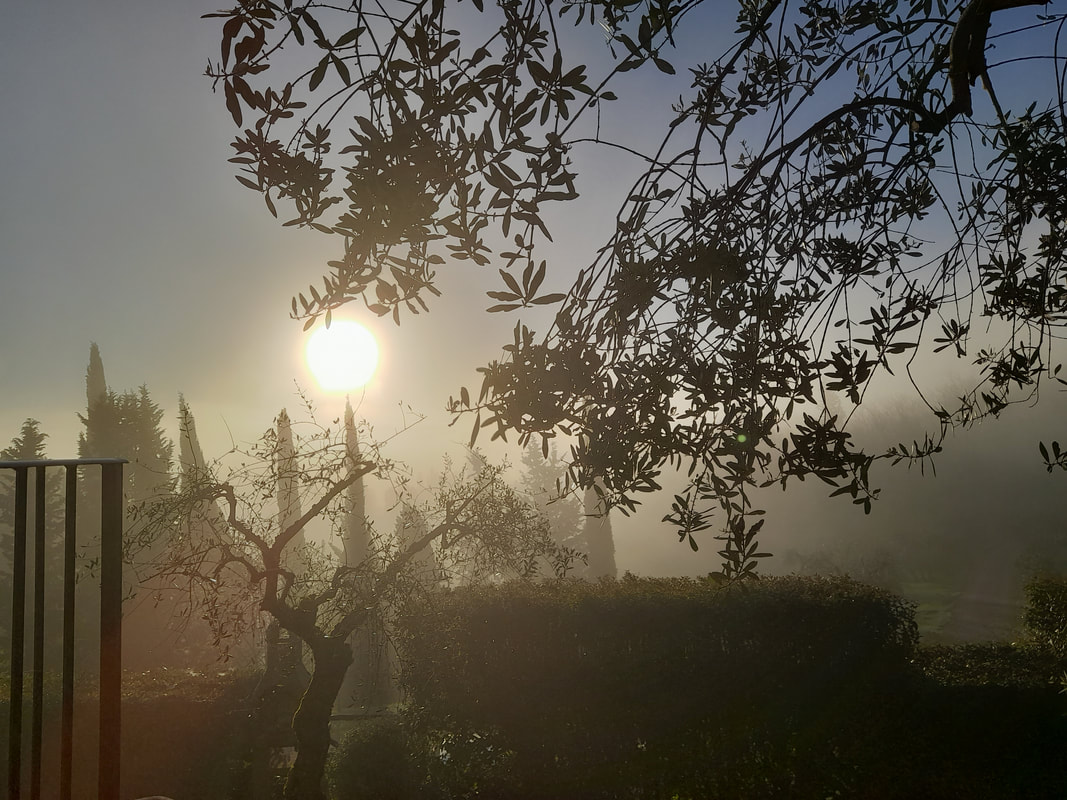
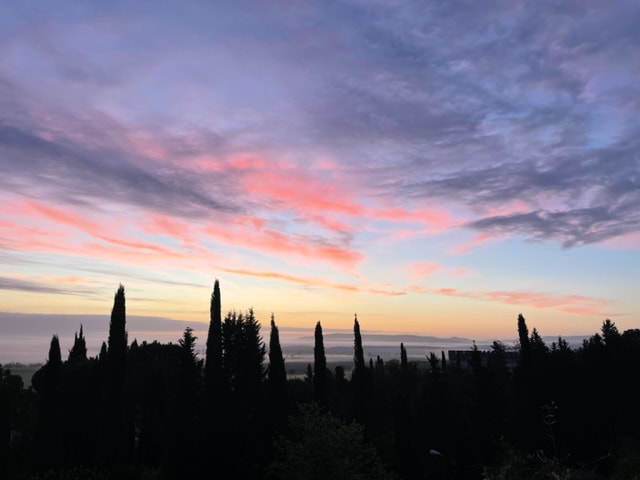
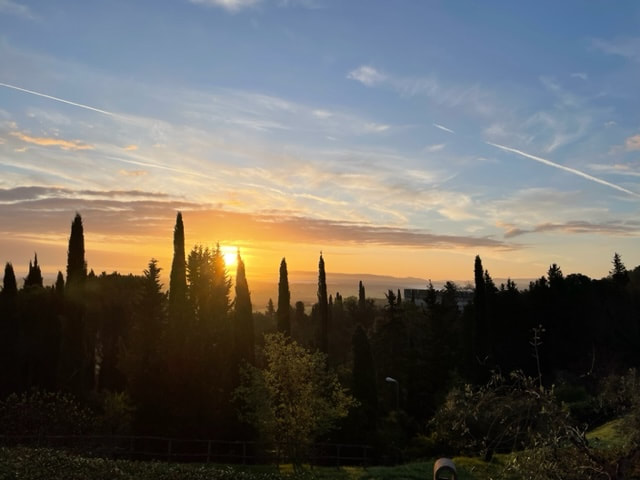
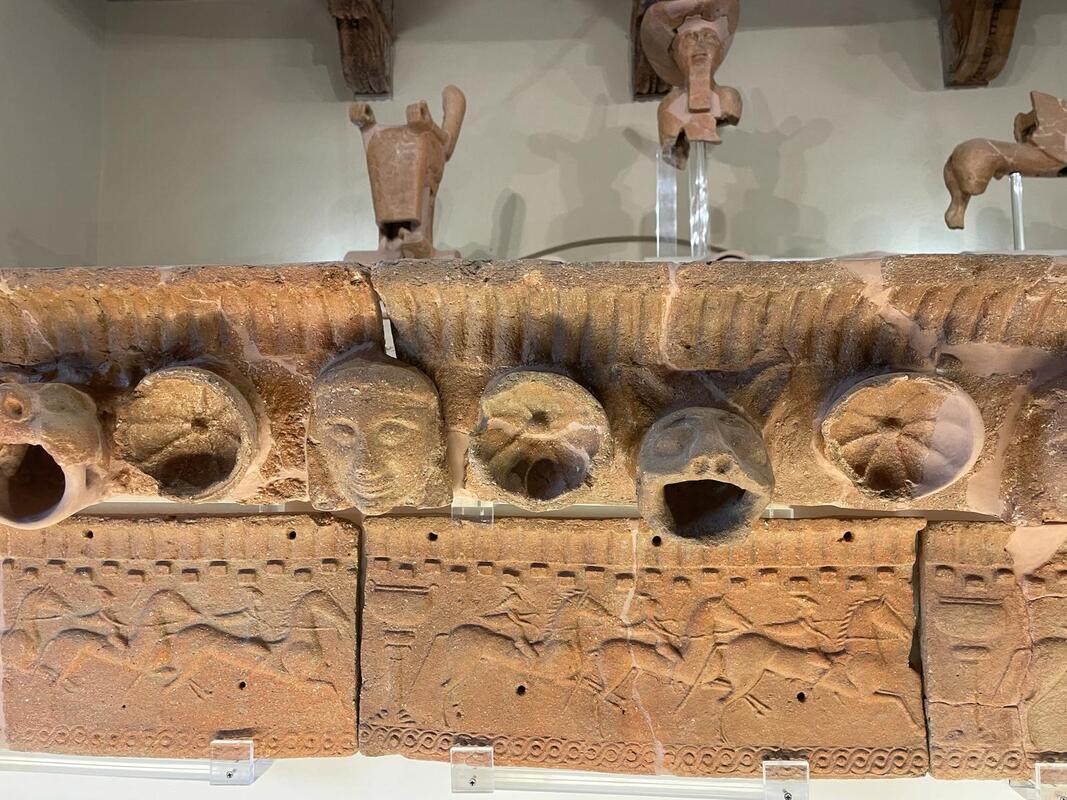
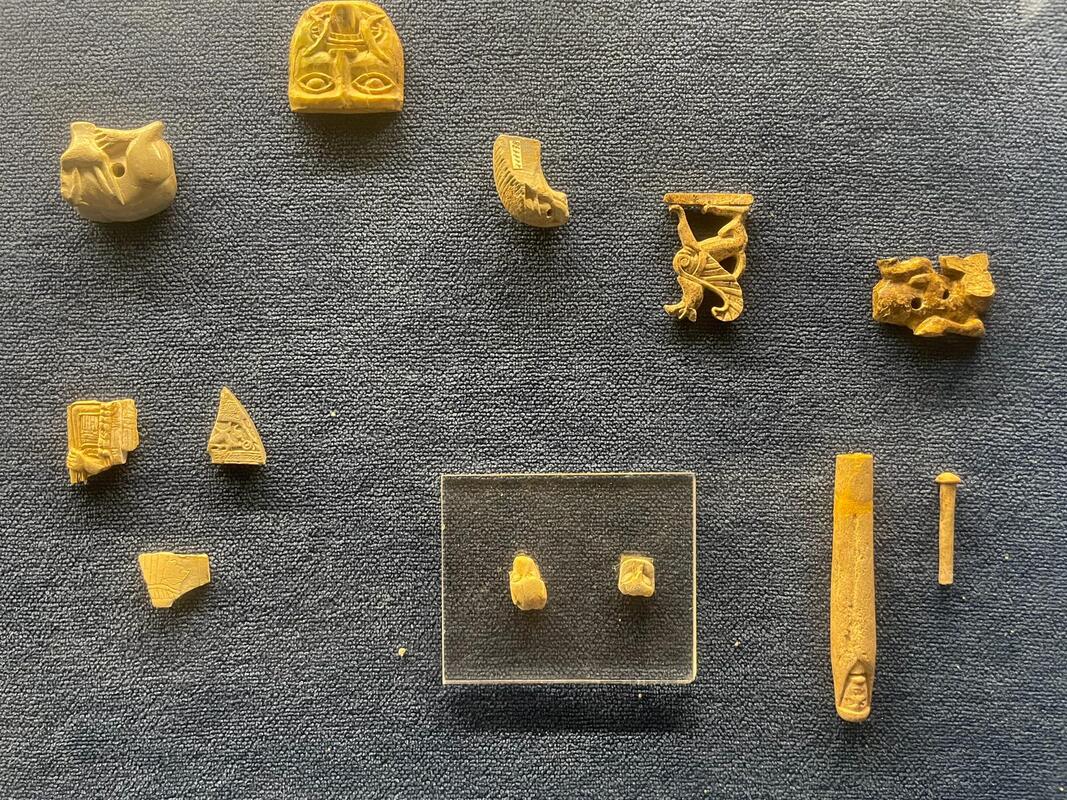
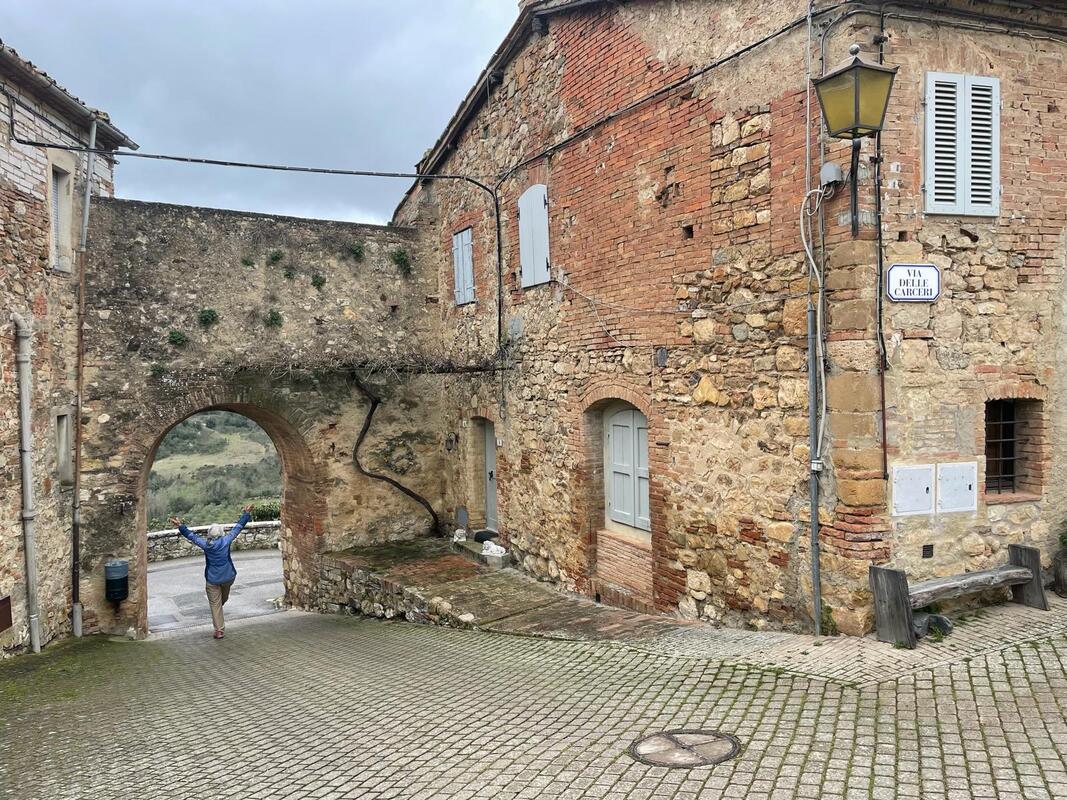
On our first morning, and often, there is heavy mist at dawn and Siena is blotted out entirely. As the sun rises the mist diffuses and Siena is revealed. Wisps of mist drift up the wooded hillside toward our nearest tower which dominates the skyline. Tuscan hilltops often have fortified medieval settlements, the borgo, the walled farmstead. Conservation ensures the medieval walls and the facades are preserved but interiors are often modernised to provide apartments. Hill-top settlements go back far earlier than the medieval period, like the remnants of Bronze Age and Roman settlements on the hill-top at Siena Vecchia. And Poggia Civitate’s Etruscan settlement dating back to 600 BCE. Had it not been raining heavily we might have explored the wooded hill top where shepherds found Etruscan pottery that triggered archaeologists to excavate. Instead, we look out from the windows of the lovely Etruscan museum at Murlo, out over terracotta pantiles toward Poggio Civitate. Within the museum there’s a replica of an Etruscan roof with pantiles and a decorative scheme of human and animal figures along the guttering.
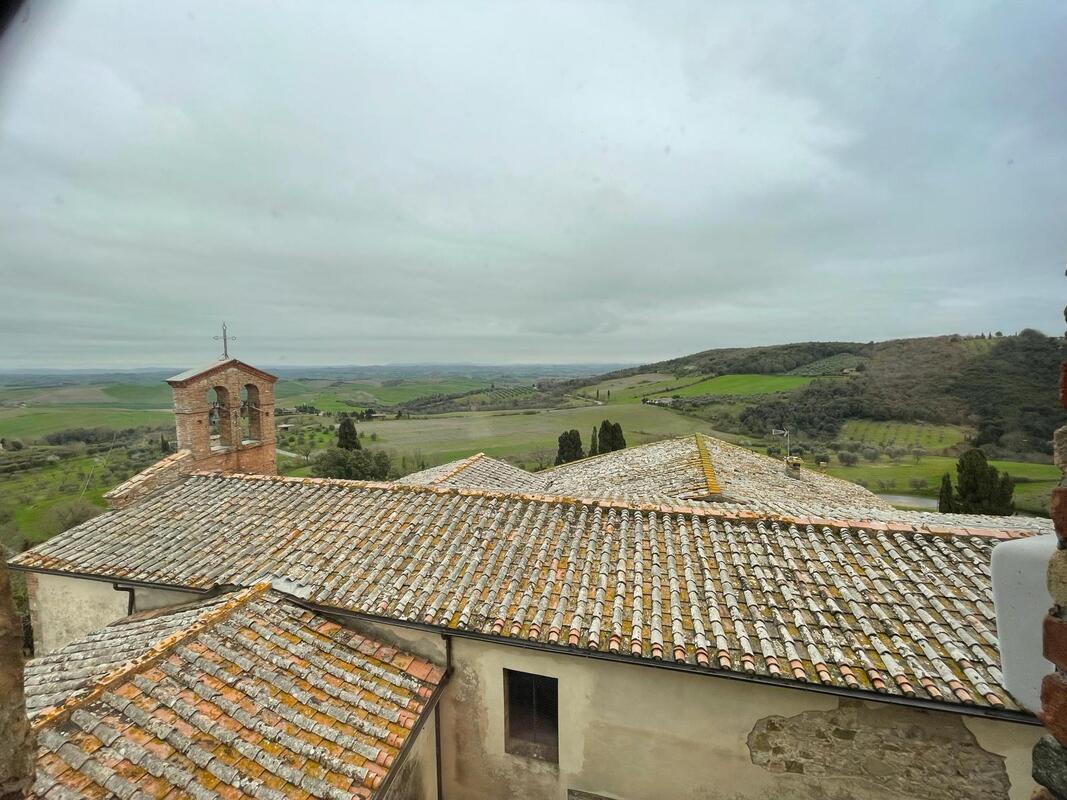
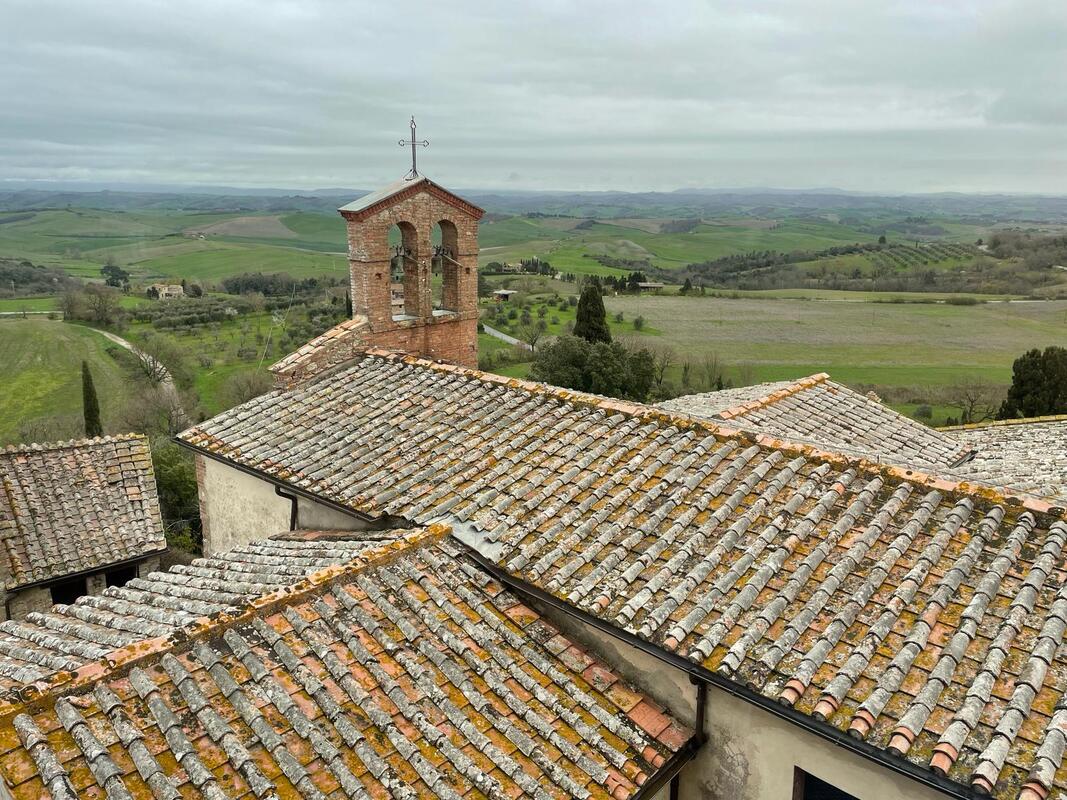
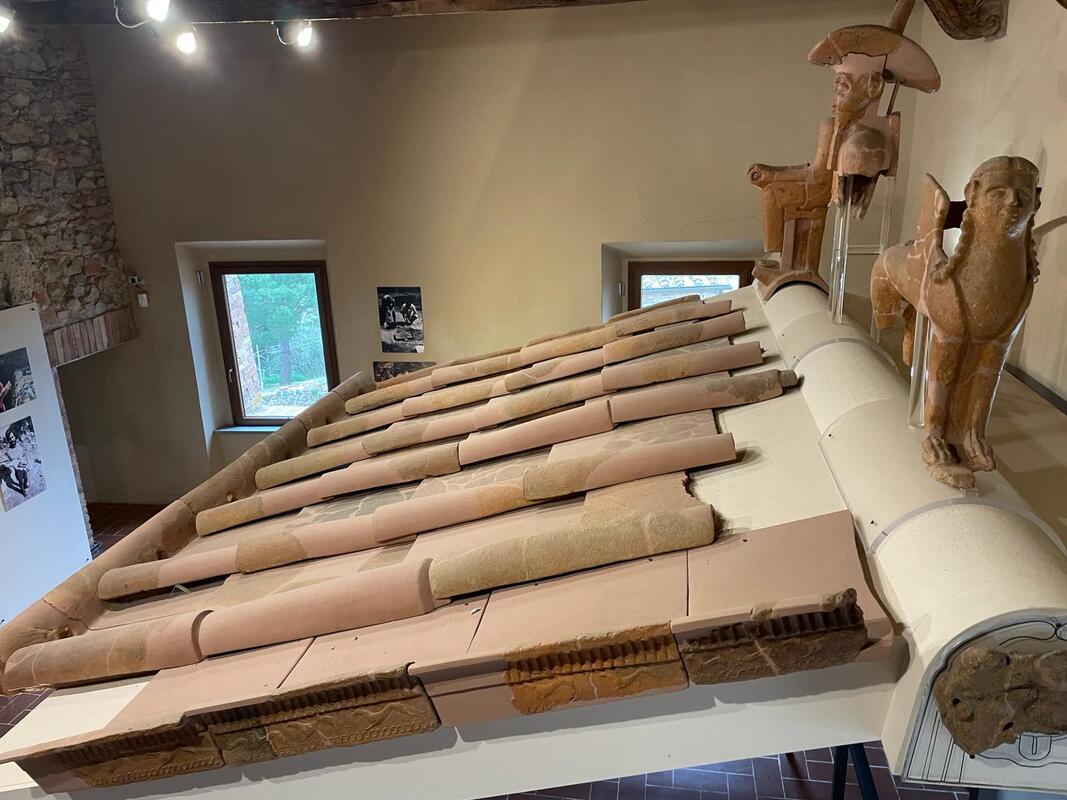
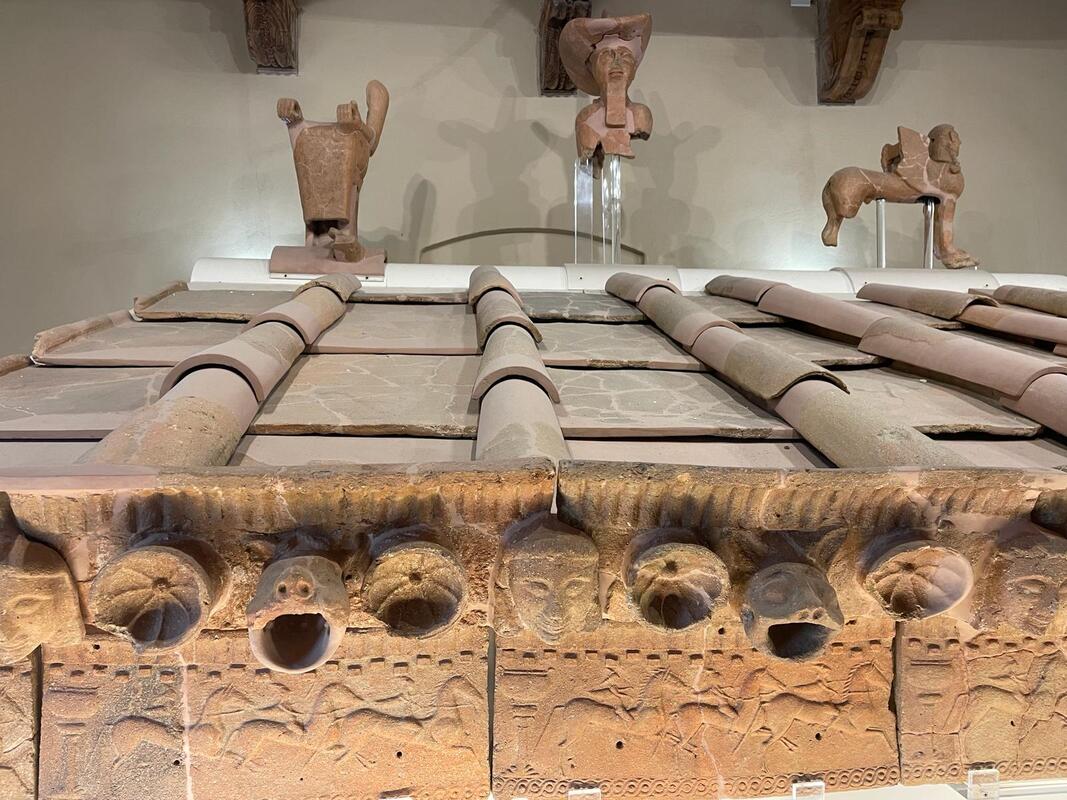
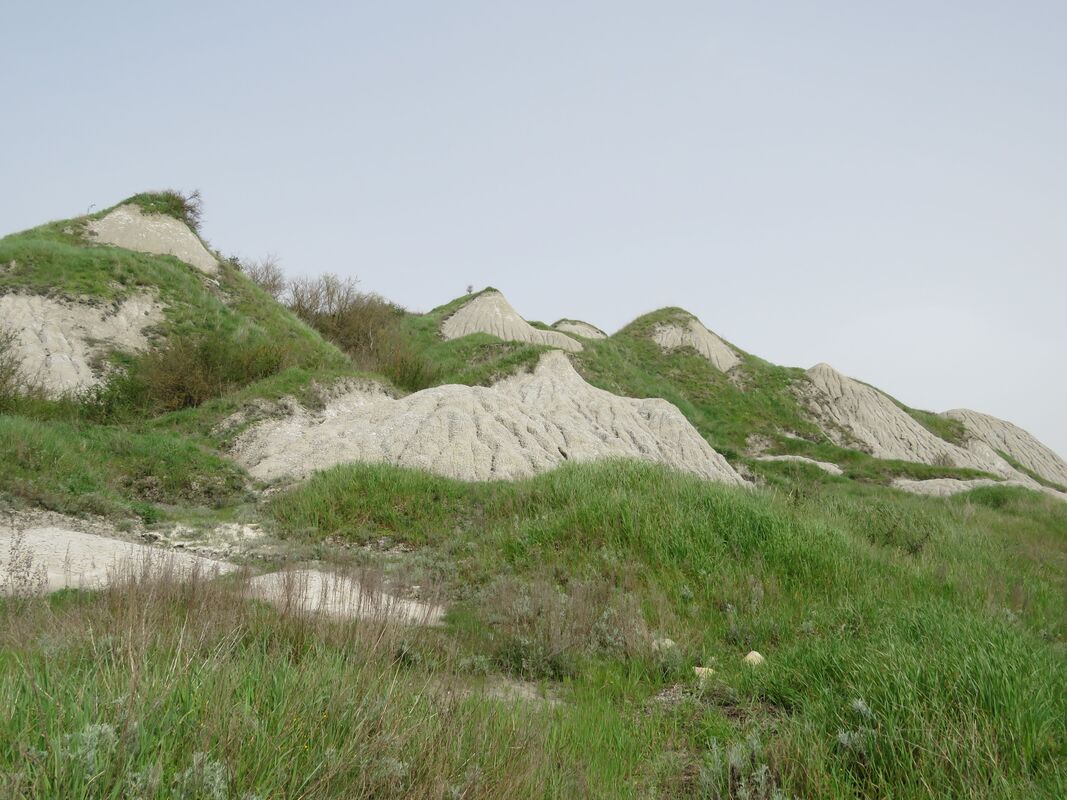
Le Crete Sinesi, the Sienese Clays. Clay in this region has unique properties. It’s rich in iron which gives terracotta a reddish hue. Its extremely malleable quality, its elasticity and resistance ensure that when it’s been fired it’s durable and weather-resistant. Terracotta pantiles and roof decorations date back to Etruscan times, 600 BC.
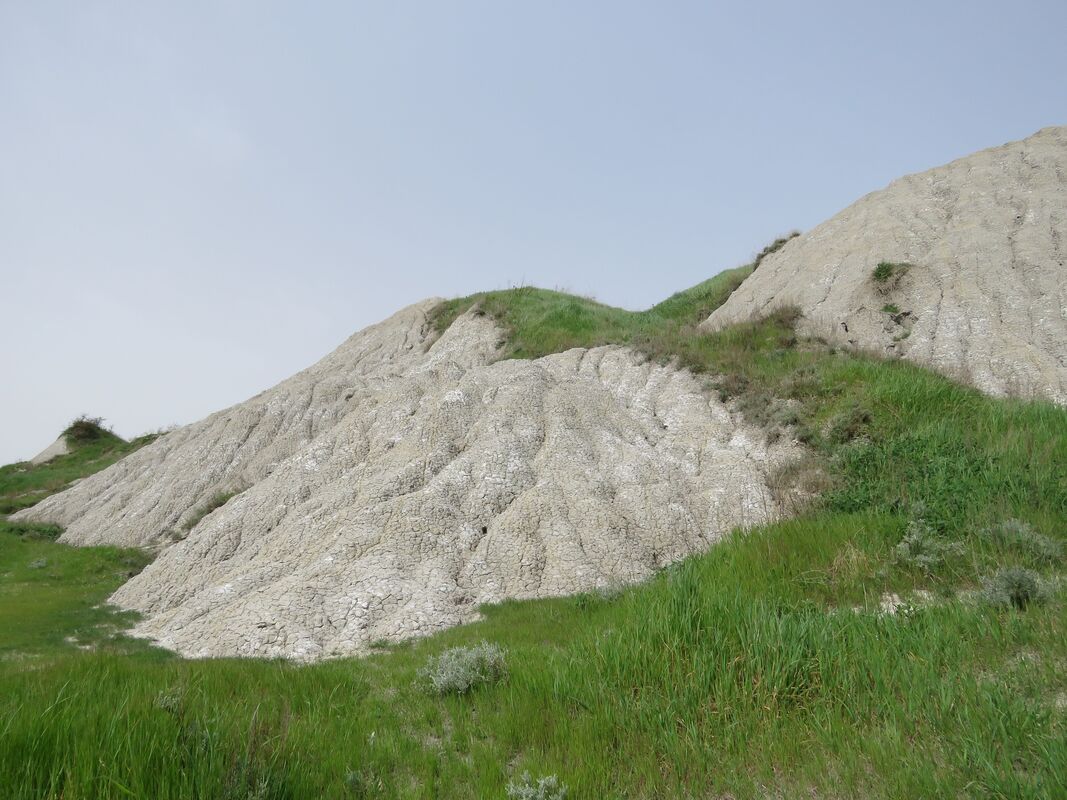
Le Crete Sinesi, the Sienese Clays, show spectacularly at the geo-site we visit. Erosion of the clays has created bizarre forms, La Biancana, the whitish hillocks bare on the south side, patterned like crazed ceramics, and vegetated on the north side.
Walking near Pienza after heavy rain, puddled clay sticks to our shoes and takes determined brushing and washing to shift.
Le Crete SInesi- cretaceous, creta is the Latin word for chalk,
Le Crete Sinesi, the Sienese Clays, show spectacularly at the geo-site we visit. Erosion of the clays has created bizarre forms, La Biancana, the whitish hillocks bare on the south side, patterned like crazed ceramics, and vegetated on the north side.
Walking near Pienza after heavy rain, puddled clay sticks to our shoes and takes determined brushing and washing to shift.
Le Crete SInesi- cretaceous, creta is the Latin word for chalk,
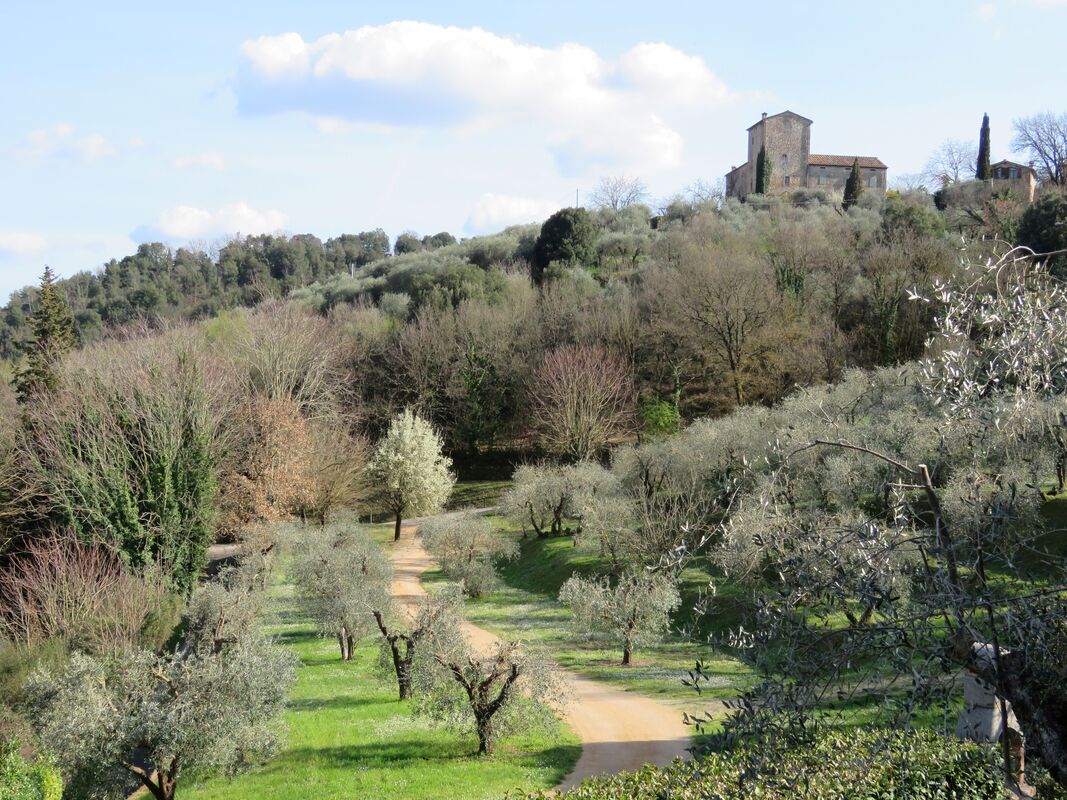
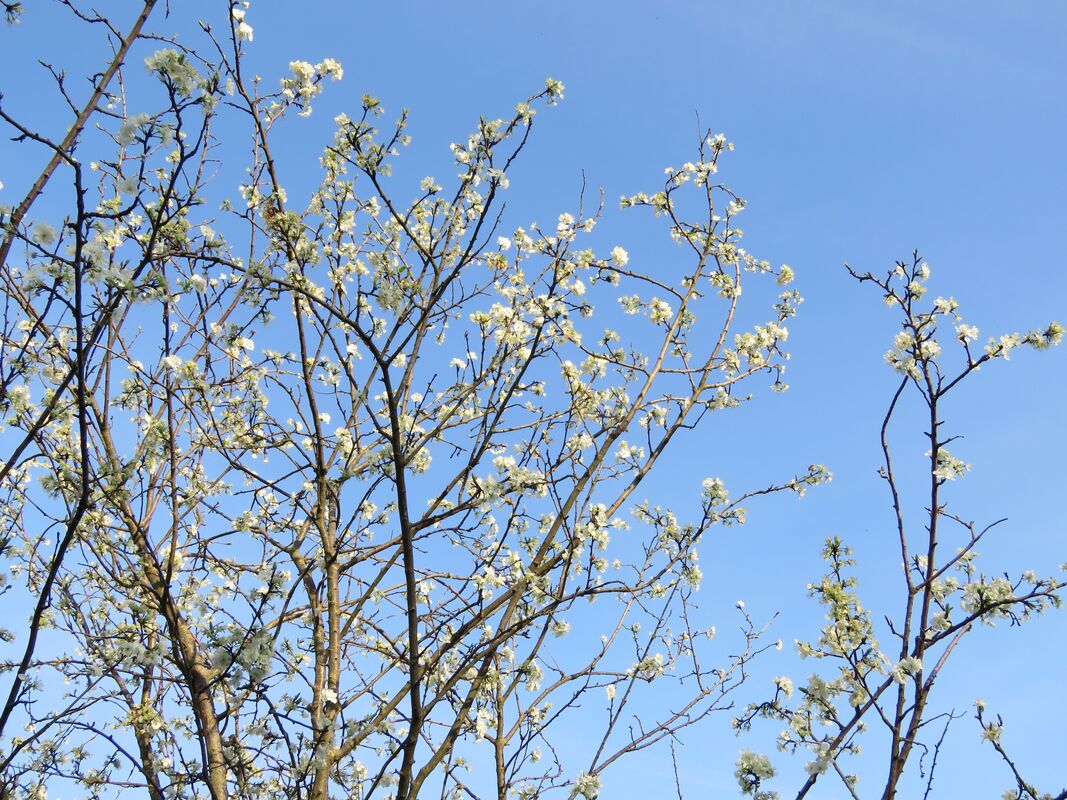
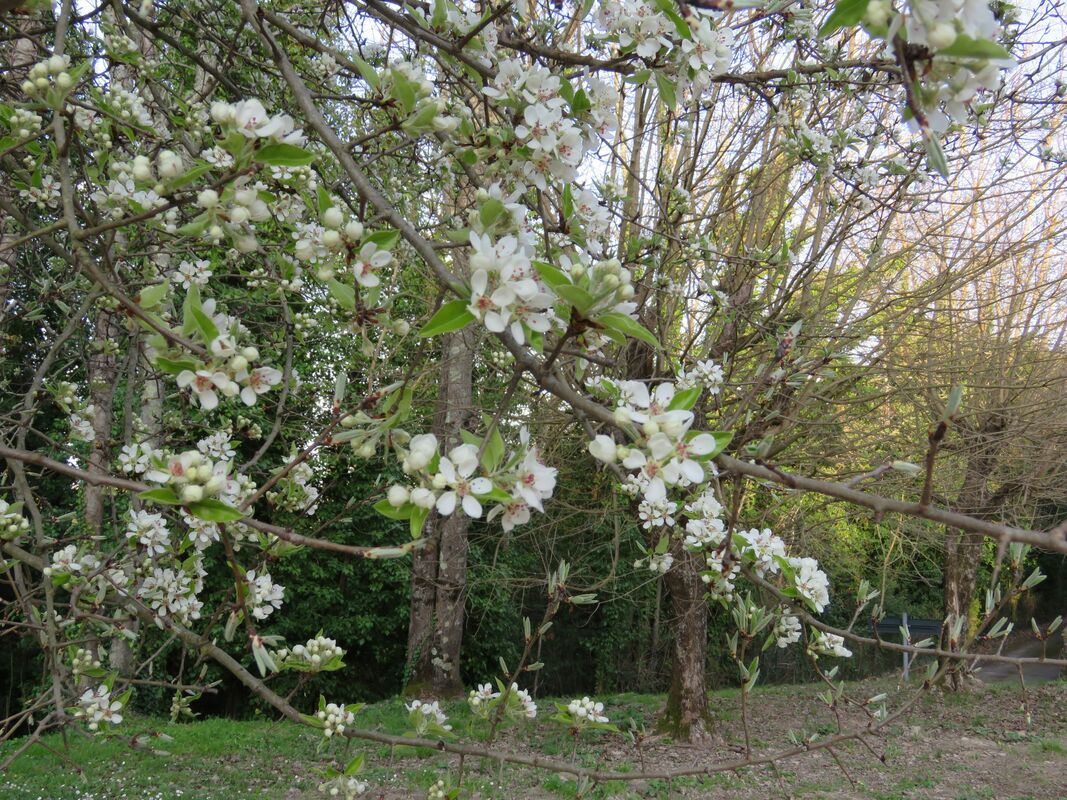
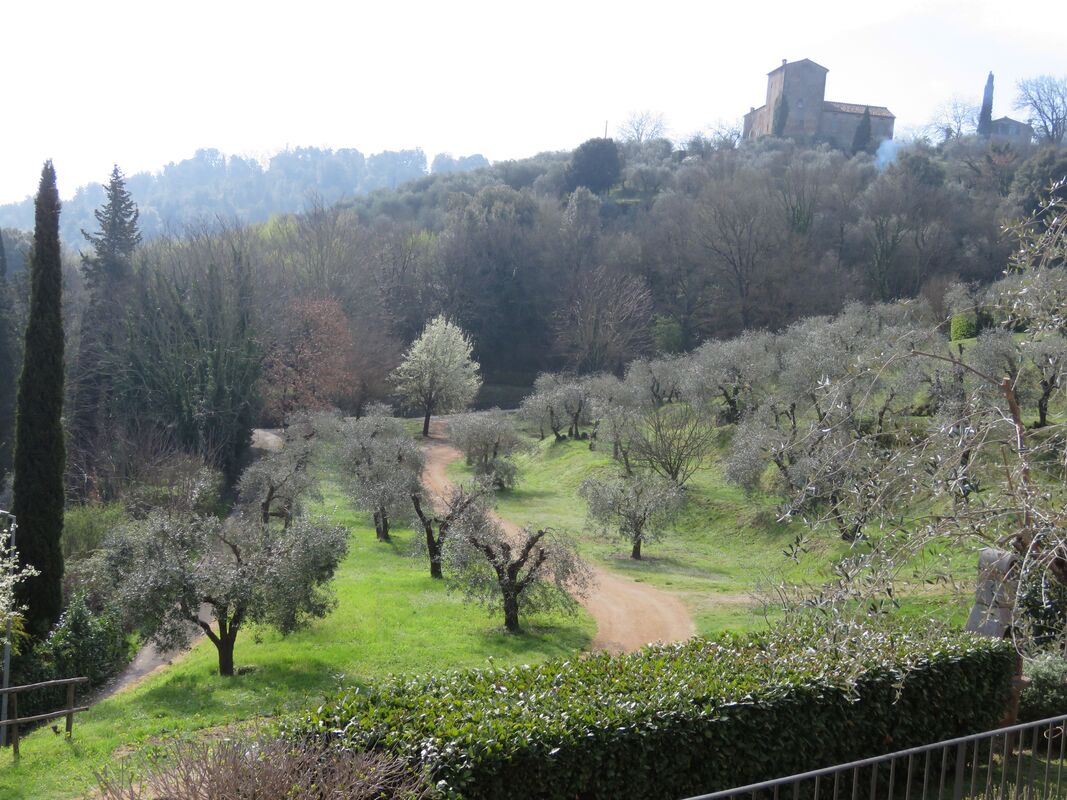
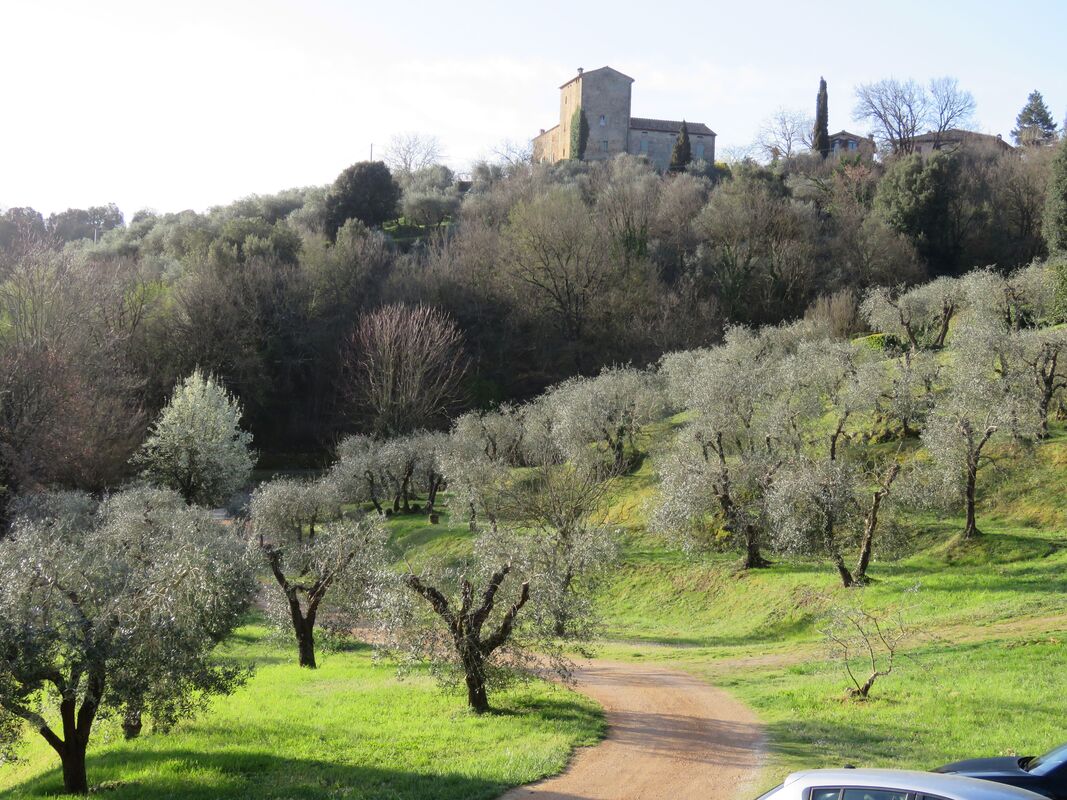
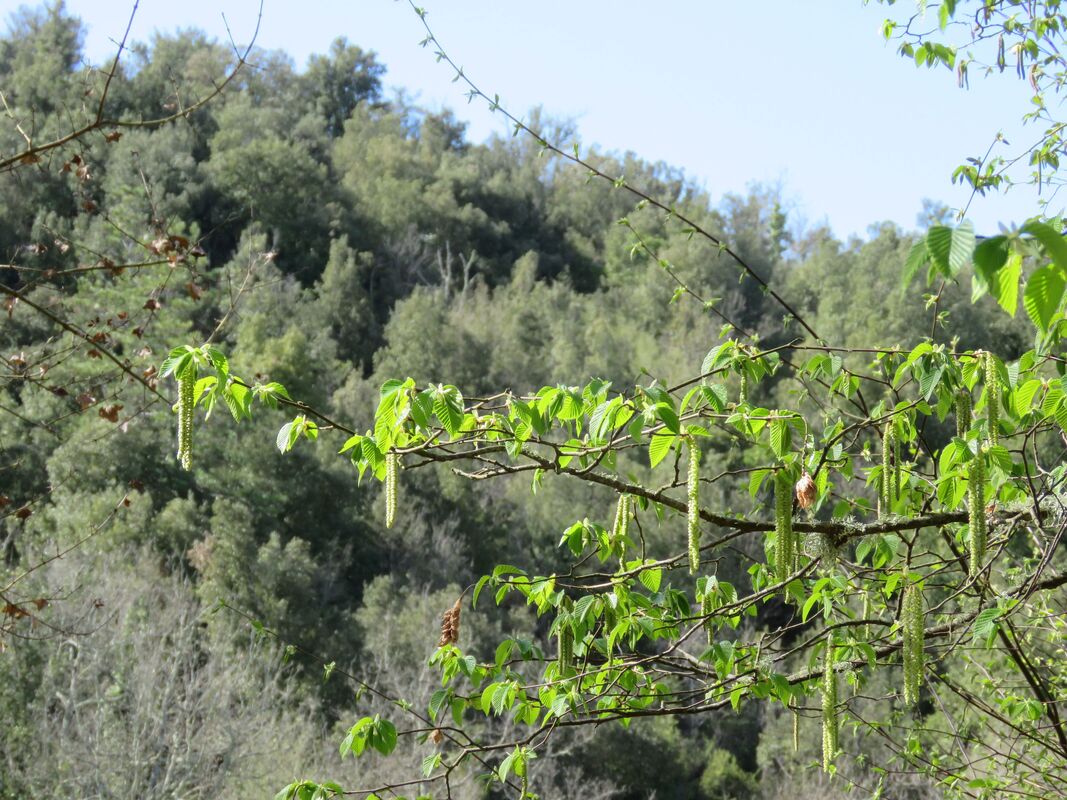
Each morning we’re out on the terrace before sunrise, listening to the dawn chorus. Woodpecker are drumming, a green woodpecker calls and there’s the raucous call of a jay. Goldfinch sing and a redstart sings from his display perch in the top of a pine. There are small birds I cannot see because the light isn’t falling on the olive trees where they are. When we arrive on 22nd March the orchard trees are in blossom and a plum tree catches the early morning light. The olive trees have evergreen leaves with a silver sheen and sometimes trunks have been cut back to let the tree regenerate, showing their age. Tall cypress and pines are a motif of the Tuscan landscape and birds touch down and vanish. We often hear birdsong from dark and dense foliage but see nothing. Swallows fly to and fro beneath the eaves, their numbers growing as April comes.
At night, we listen to the evening chorus. When the light fades the wood is plunged into darkness and singing stops. The hill-top towers stand proud and catch the last glimmer of light. Toward the end of March we sit out watching a full moon and stars, and one evening an owl is calling.
In the spring of 1995 we stayed in a hill-top villa in countryside north east of Siena so I reflect on natural history, then and now, and the change there will have been. We enjoy the dawn chorus now but I feel it was louder and more lavish back then. Not surprising with loss of numbers and species decline. Then, we heard a cuckoo calling every day. And swallow-tail butterflies came to nectar on garden flowers. I am eager for a reprise of both. Good Government has at its heart a respect for the natural world, let nature thrive.
At night, we listen to the evening chorus. When the light fades the wood is plunged into darkness and singing stops. The hill-top towers stand proud and catch the last glimmer of light. Toward the end of March we sit out watching a full moon and stars, and one evening an owl is calling.
In the spring of 1995 we stayed in a hill-top villa in countryside north east of Siena so I reflect on natural history, then and now, and the change there will have been. We enjoy the dawn chorus now but I feel it was louder and more lavish back then. Not surprising with loss of numbers and species decline. Then, we heard a cuckoo calling every day. And swallow-tail butterflies came to nectar on garden flowers. I am eager for a reprise of both. Good Government has at its heart a respect for the natural world, let nature thrive.
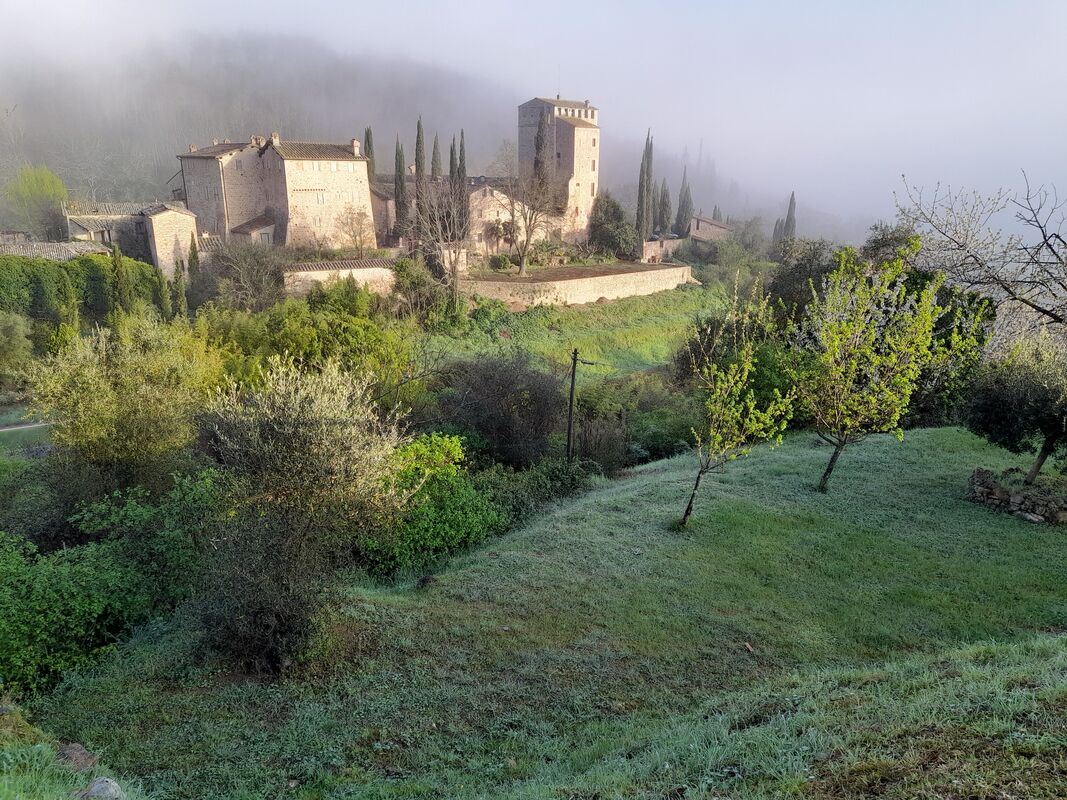
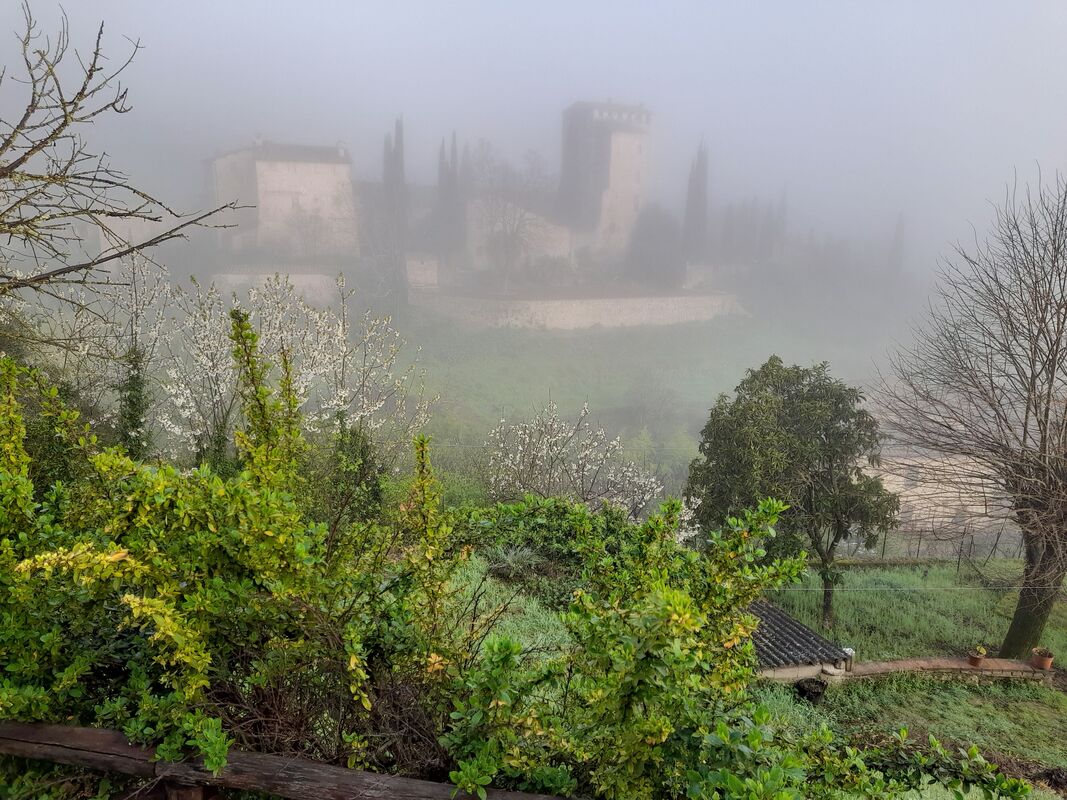
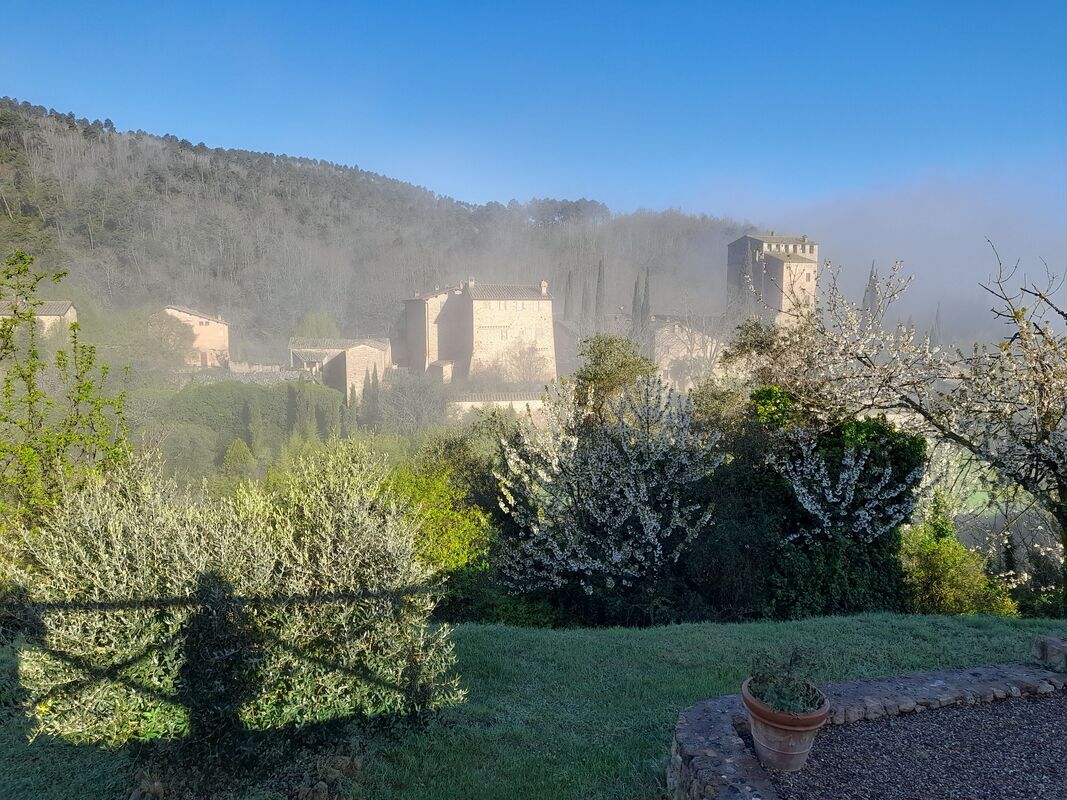
On the western side of the settlement a terrace looks out over fruit trees and olives toward rising woods and another tower which catches all the subtleties of sunlight. A dog barks and it seems to be answered from another dog across the valley, but it’s an echo. On the lower slopes are bee hives and our palazzo produces honey and olive oil.
Our walks in Le Crete Sinesi show different landscapes and the nature of the woods is quite unlike the Cumbrian woodland I know well. There’s a Mediterranean flora and fauna, some is unfamiliar and there’s much to discover. These woods strike the senses in a new way. Light works differently through the trees, there are unusual fragrances of tree- flowers, birdsong brings unknown notes and there are unusual butterflies.
Our walks in Le Crete Sinesi show different landscapes and the nature of the woods is quite unlike the Cumbrian woodland I know well. There’s a Mediterranean flora and fauna, some is unfamiliar and there’s much to discover. These woods strike the senses in a new way. Light works differently through the trees, there are unusual fragrances of tree- flowers, birdsong brings unknown notes and there are unusual butterflies.
 RSS Feed